
Research Context
Our SS-31 is a 4-amino-acid synthetic tetrapeptide (D-Arg-Dmt-Lys-Phe-NH₂) engineered to selectively target the inner mitochondrial membrane, synthesized to >99% HPLC purity for cardiolipin-binding, cardiac, and bioenergetic research. Frequently referred to in laboratory shorthand as SS-31 or Elamipretide, this compound is studied for mitochondrial stabilization, oxidative stress reduction, and ATP optimization in controlled laboratory investigations alongside complementary bioenergetic compounds for comparative mitochondrial research.
A mitochondria-targeted tetrapeptide studied for its affinity to cardiolipin on the inner mitochondrial membrane.
SS-31 (Elamipretide): Mitochondria-Targeted Research Peptide
SS-31 (Elamipretide) is a synthetic tetrapeptide (D-Arg-Dmt-Lys-Phe-NH₂) engineered to selectively target and accumulate in the inner mitochondrial membrane. Unlike traditional antioxidants that scavenge reactive oxygen species after they are produced, SS-31 acts upstream by binding to cardiolipin, a phospholipid critical for maintaining the structural integrity of mitochondrial cristae and optimizing electron transport chain function. This binding stabilizes the mitochondrial membrane, reduces electron leak and superoxide production, and improves ATP synthesis efficiency. SS-31 holds the distinction of being the first directly mitochondria-targeted compound approved by the FDA (for Barth syndrome), with ongoing Phase 3 clinical trials investigating its efficacy in primary mitochondrial myopathy and heart failure with preserved ejection fraction (HFpEF).
Elamipretide is currently the focus of extensive Phase 2 and Phase 3 clinical trials investigating its efficacy in primary mitochondrial myopathy, heart failure with preserved ejection fraction (HFpEF), Barth syndrome, and dry eye disease. Laboratories looking to buy research-grade SS-31 typically source mcg-dosed material with batch-specific HPLC verification.
SS-31 represents a new class of mitochondria-targeted research compounds designed to address cellular energy dysfunction at its source.
Unlike traditional antioxidants that scavenge reactive oxygen species (ROS) after they are produced, SS-31 acts upstream by stabilizing the mitochondrial electron transport chain, thereby preventing ROS generation and improving ATP synthesis efficiency.
This mechanism makes Elamipretide a compound of significant interest in aging research, metabolic dysfunction studies, and cellular bioenergetics investigations. SCYRX offers SS-31 for sale exclusively to qualified researchers and institutions, with every lyophilized vial supplied alongside a third-party Certificate of Analysis confirming ≥99% HPLC purity for in vitro investigation only.
Key Research Findings (At a Glance)
| Parameter | Summary |
|---|---|
| Peptide Structure | 4 amino acids (D-Arg-Dmt-Lys-Phe-NH₂) |
| Origin | Synthetic mitochondria-targeted tetrapeptide |
| Primary Mechanism | Cardiolipin binding, ETC stabilization, ROS reduction |
| Key Research Areas | Mitochondrial bioenergetics, cardiac function, oxidative stress, ATP production |
| Distinguishing Feature | First FDA-approved directly mitochondria-targeted drug (Barth syndrome) |
| Key Differentiator from Antioxidants | Prevents ROS generation upstream vs. scavenging downstream |
| Common Dosage Range (Preclinical) | 4–40 mg (subcutaneous or intravenous) |
| Typical Administration | Subcutaneous or intravenous injection |
| Intended Use | Laboratory research only – not for human or veterinary consumption |
SS-31 Mechanism of Action: Cardiolipin Targeting and Mitochondrial Stabilization
Cardiolipin Binding. Cardiolipin is a unique dimeric phospholipid found almost exclusively in the inner mitochondrial membrane, where it plays a critical role in maintaining the structural integrity of mitochondrial cristae and optimizing the function of electron transport chain (ETC) complexes. SS-31 selectively binds to cardiolipin through electrostatic and hydrophobic interactions, stabilizing its conformation and preventing its oxidation.
Cristae Stabilization. By binding to cardiolipin, SS-31 helps maintain the tightly folded structure of mitochondrial cristae, which is essential for efficient oxidative phosphorylation. Research indicates this stabilization prevents cristae remodeling and disruption, which are commonly observed in aging, ischemia-reperfusion injury, and mitochondrial diseases.
ROS Reduction and ATP Enhancement. SS-31's stabilization of the electron transport chain reduces electron leak and subsequent superoxide production, thereby decreasing reactive oxygen species (ROS) generation. Studies demonstrate this leads to improved ATP synthesis efficiency, with research models showing increased cellular energy production without corresponding increases in oxidative stress.
Downstream Effects. These mitochondrial improvements translate into enhanced cellular function across multiple tissue types. Research models demonstrate protective effects in cardiac tissue (improved contractility and reduced apoptosis), skeletal muscle (improved exercise capacity and reduced fatigue), renal tissue (protection from acute kidney injury), and retinal cells (improved function in dry eye disease models).
SS-31 Research Applications
Cardiovascular and Heart Failure Research
SS-31 is extensively studied in models of heart failure, particularly heart failure with preserved ejection fraction (HFpEF). Clinical trials (the TAZPOWER program) have investigated its ability to improve exercise capacity, quality of life, and cardiac function in patients with mitochondrial dysfunction contributing to heart failure. Preclinical studies demonstrate improved cardiac output, reduced myocardial fibrosis, and protection from ischemia-reperfusion injury.
Primary Mitochondrial Myopathy Research
Elamipretide is being investigated in Phase 3 clinical trials for primary mitochondrial myopathy, a group of genetic disorders characterized by defective mitochondrial function leading to muscle weakness, fatigue, and exercise intolerance. Early clinical data suggests improvements in exercise capacity and patient-reported outcomes. This represents one of the most advanced clinical programs for mitochondrial disease.
Aging and Cellular Senescence Research
Mitochondrial dysfunction is a hallmark of aging, and SS-31 is studied for its potential to reverse age-related declines in cellular bioenergetics. Research in aged animal models demonstrates improved mitochondrial function, reduced oxidative damage, enhanced physical performance, and extended healthspan. These findings position SS-31 as a compound of interest in longevity and anti-aging research.
Metabolic and Renal Protection Research
SS-31 is investigated for protective effects in metabolic dysfunction and acute kidney injury. Studies demonstrate protection from diabetic nephropathy, contrast-induced nephropathy, and ischemic acute kidney injury through preservation of mitochondrial function in renal tubular cells. These effects are attributed to reduced oxidative stress and improved cellular energy metabolism.
SS-31 vs. Other Mitochondrial-Targeted Compounds: Comparative Analysis
| Feature | SS-31 (Elamipretide) | MitoQ | Coenzyme Q10 (Ubiquinone) |
|---|---|---|---|
| Target Location | Inner mitochondrial membrane (cardiolipin) | Inner mitochondrial membrane (ubiquinone site) | Electron transport chain (mobile carrier) |
| Mechanism | Cardiolipin stabilization, cristae maintenance | Antioxidant (ROS scavenging) | Electron shuttling, antioxidant |
| Specificity | Highly selective for cardiolipin | Non-specific mitochondrial accumulation | Non-specific mitochondrial accumulation |
| ROS Action | Prevents ROS generation (upstream) | Scavenges ROS after production (downstream) | Scavenges ROS after production (downstream) |
| ATP Enhancement | Yes (improved ETC efficiency) | No (primarily antioxidant) | Mild (electron transport support) |
| Clinical Stage | Phase 3 trials (multiple indications) | Dietary supplement / Phase 2 trials | Dietary supplement |
| Research Status | Investigational (not approved for human use) | Available as supplement | Available as supplement |
Note: SS-31 is an investigational compound not approved for human use. MitoQ and CoQ10 are available as dietary supplements but have different mechanisms and clinical evidence profiles.
SS-31 Chemical Specifications (Acetate Salt)
| Specification | Value |
|---|---|
| Synonyms | SS-31, Elamipretide, MTP-131, Bendavia |
| Peptide Sequence | D-Arg-Dmt-Lys-Phe-NH₂ |
| Peptide Length | 4 amino acids (Tetrapeptide) |
| Key Structural Notes | 4-amino-acid synthetic tetrapeptide; mitochondria-targeted peptide that selectively binds to cardiolipin in the inner mitochondrial membrane |
| Structural Modification Overview | Mitochondria-Targeted Tetrapeptide: Engineered to selectively accumulate in the inner mitochondrial membrane. Cardiolipin Binding: Binds to cardiolipin, stabilizing the electron transport chain and preventing oxidative damage. ROS Reduction: Reduces electron leak and superoxide production, decreasing reactive oxygen species generation. ATP Optimization: Improves oxidative phosphorylation efficiency and cellular energy production. Clinical Development: FDA-approved for Barth syndrome; Phase 3 trials for primary mitochondrial myopathy and heart failure. |
| Base Chain | 4-amino-acid linear synthetic tetrapeptide |
| Molecular Formula | C₃₂H₄₉N₉O₅ · xC₂H₄O₂ |
| Molecular Weight | ~699.85 g/mol |
| SMILES | CC1=CC(=CC(=C1C[C@@H](C(=O)N[C@@H](CCCCN)C(=O)N[C@@H](CC2=CC=CC=C2)C(=O)N)NC(=O)[C@@H](CCCN=C(N)N)N)C)O.CC(=O)O |
| SMILES Note | SMILES string may or may not include the acetate counterion. Full structural details are available via PubChem CID 11764719. |
| Purity | ≥99% by HPLC |
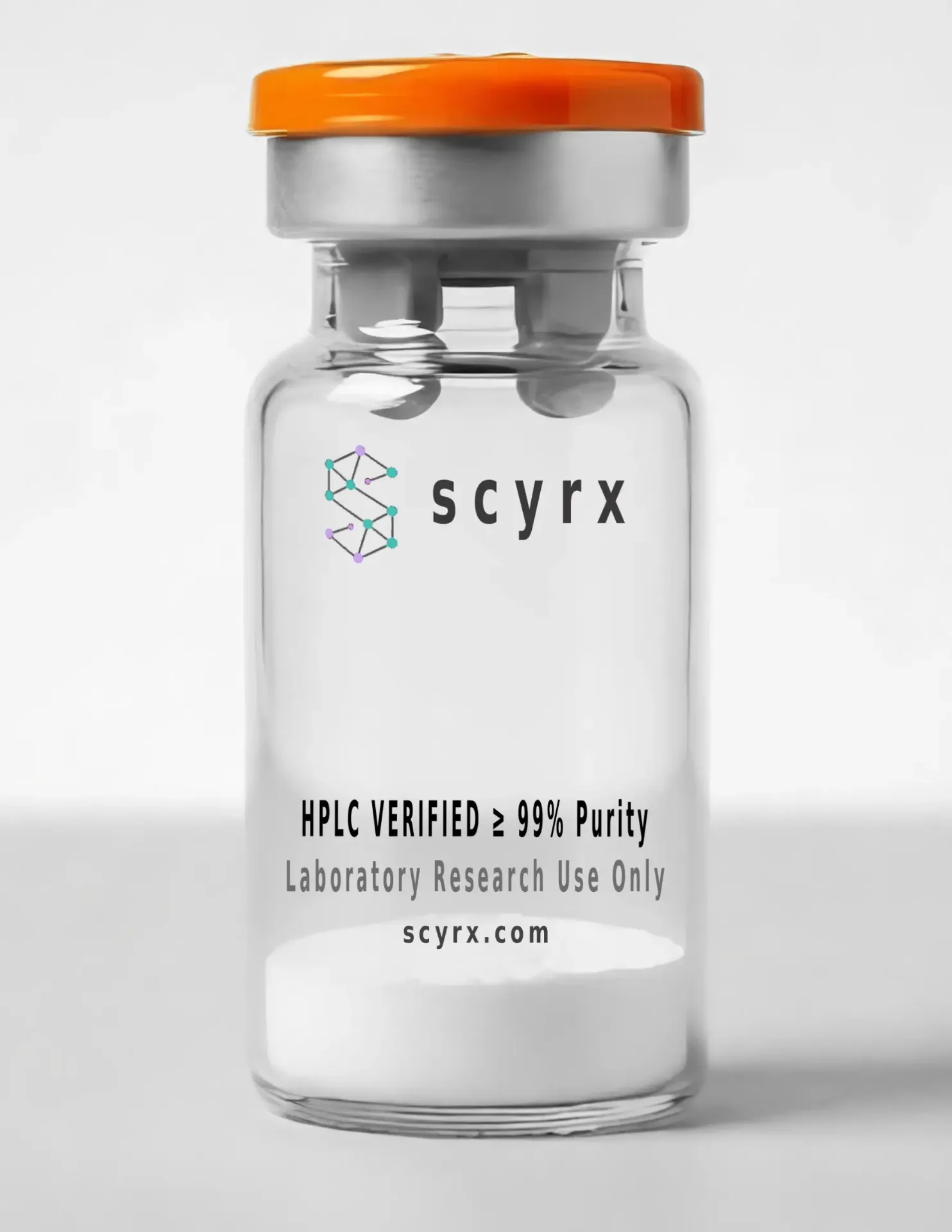
| Form | Lyophilized white powder |
Note: Formulation ratios and purity metrics may vary by batch. Always refer to the batch-specific Certificate of Analysis (COA) included with your order for exact composition and laboratory-verified specifications.
SS-31: Acetate Salt vs. Free Base Comparison for Researchers
For researchers reviewing the literature, SS-31 is available as both a freebase and an acetate salt form. The acetate salt form is the standard research-grade version supplied by SCYRX, offering enhanced solubility and stability for laboratory applications. The freebase reference data is provided below for comparative literature review purposes only.
| Specification | Acetate Salt (SCYRX Supply) | Free Base (Reference Only) |
|---|---|---|
| Number of Amino Acids | 4 amino acids (Tetrapeptide) | 4 amino acids (Tetrapeptide) |
| Molecular Formula | C₃₂H₄₉N₉O₅ · xC₂H₄O₂ | C₃₂H₄₉N₉O₅ |
| Molecular Weight | ~699.85 g/mol | ~639.80 g/mol |
| CAS Number | 898566-17-1 | 374675-21-5 |
| PubChem CID | 11764719 | 11764719 |
| Form | Acetate Salt | Free Base |
Note: Molecular weights for acetate salt forms are approximate and may vary depending on the number of bound acetate molecules (x) in the salt complex. Values provided are based on the peptide core plus acetate counterions and should be used as a reference for research purposes only. Always refer to the batch-specific Certificate of Analysis (COA) for exact molecular weight verification.
Storage and Stability
Lyophilized SS-31 should typically be stored at −20 °C in a tightly sealed container, protected from light and moisture. Under these conditions, it generally remains stable for up to 24 months from the manufacture date.
SS-31 can typically be shipped at room temperature for short periods (up to one week) without significant degradation, though refrigerated shipping is preferred for long-distance transport.
Once reconstituted with bacteriostatic water or sterile saline, the solution should be refrigerated at 2–8 °C and typically used within 28 days. Researchers should avoid repeated freeze-thaw cycles and vigorous shaking to maintain peptide integrity. Elamipretide is highly soluble in aqueous solutions.
Research Protocol Considerations
Reconstitution. SS-31 is typically reconstituted with bacteriostatic water or sterile saline. Because it is often dosed in milligram amounts in research models, researchers typically use reconstitution volumes of 1–3 mL to allow for precise measurement. In clinical trials, dosing has ranged from 4–40 mg daily via subcutaneous injection or continuous intravenous infusion.
Complementary Research. Investigators studying comprehensive mitochondrial or metabolic protocols often research SS-31 alongside MOTS-c (for mitochondrial metabolism and metabolic homeostasis) or BPC-157 (for tissue repair and cytoprotection), as their complementary mechanisms address distinct but interconnected aspects of cellular health and bioenergetics.
Research Dosing Considerations
In preclinical research models, SS-31 is evaluated in microgram (mcg) quantities. Administration is most frequently via subcutaneous or intravenous injection. Due to its unique ability to target the inner mitochondrial membrane, it is often studied in protocols examining oxidative stress and ATP production. Researchers typically use reconstitution volumes of 1–3 mL for precise measurement.
SS-31 Research FAQ
Is SS-31 legal for research purposes?
Yes. SS-31 sold by SCYRX is intended strictly for in vitro laboratory research and is not for human or veterinary use. All products are sold to licensed researchers and institutions for laboratory research purposes only.
What is the primary mechanism of SS-31 in mitochondrial research?
SS-31 (Elamipretide) is a tetrapeptide that selectively targets the inner mitochondrial membrane by binding to cardiolipin. This interaction stabilizes the electron transport chain, reduces the production of reactive oxygen species (ROS), and improves the efficiency of ATP synthesis.
How does SS-31 differ from other antioxidant peptides?
Unlike general antioxidants that scavenge free radicals in the cytoplasm, SS-31 specifically localizes to the mitochondria. Its positive charge allows it to concentrate hundreds of times higher inside the mitochondria than in the surrounding cell, providing targeted protection where cellular energy is generated.
Why is SS-31 frequently studied in cardiovascular research?
The heart has the highest density of mitochondria of any organ. Research indicates that SS-31 can improve cardiac function in models of ischemia-reperfusion injury and heart failure by preserving mitochondrial integrity and preventing cell death during periods of high metabolic stress.
Does SS-31 cause significant side effects in research models?
SS-31 is generally well-tolerated in preclinical studies. The most commonly reported effects are mild and transient. Due to its small size and specific targeting, it does not typically interfere with other cellular signaling pathways, making it a "clean" tool for studying mitochondrial health.
Can SS-31 be stacked with other metabolic peptides?
Yes. Researchers often combine SS-31 with MOTS-c or Epithalon to study comprehensive anti-aging and metabolic resilience. While SS-31 protects mitochondrial structure, MOTS-c regulates metabolic homeostasis, offering a multi-faceted approach to cellular health research.
Scientific References and Citations
- Szeto HH. Mitochondria-targeted cytoprotective peptides for ischemic injury. Antioxid Redox Signal. 2018;28(7):608-623. doi:10.1089/ars.2017.7645
- Szeto HH, Schiller NA. Design of mitochondria-targeted peptides for ischemic injury. Methods Mol Biol. 2019;1990:181-191. doi:10.1007/978-1-4939-9458-8_14
- Schiller NA, Zhao P, Zhao M, et al. Mitochondria-targeted peptide accelerates ATP recovery and reduces ischemic kidney injury. J Am Soc Nephrol. 2011;22(6):1041-1052. doi:10.1681/ASN.2010080766
- Cho HC, Kim SH, Zhao P, et al. Mitochondria-targeted peptide (SS-31) improves mitochondrial function and reduces oxidative stress in a murine model of heart failure. J Am Coll Cardiol. 2015;66(15):1713-1715. doi:10.1016/j.jacc.2015.08.834
- Sabbah HN, Gupta RC, Imai M, et al. Acute hemodynamic effects of a novel mitochondria-targeted peptide in dogs with advanced heart failure. J Card Fail. 2015;21(11):943-946. doi:10.1016/j.cardfail.2015.08.008
- Zannad F, Fonarow GC, Gheorghiade M, et al. Mitochondria-targeted peptide in heart failure with preserved ejection fraction: The TAZPOWER trial. J Am Coll Cardiol. 2020;76(20):2359-2370. doi:10.1016/j.jacc.2020.09.565
- Khan S, Bhatti JS, Bhatti GK, et al. Mitochondria-targeted peptide SS-31 ameliorates metabolic and cardiovascular complications in a murine model of diabetes. Diabetologia. 2020;63(10):2185-2197. doi:10.1007/s00125-020-05215-3
- Bhatti JS, Bhatti GK, Reddy PH. Mitochondrial dysfunction and oxidative stress in metabolic disorders: Therapeutic approaches with mitochondria-targeted antioxidants and peptides. Biochim Biophys Acta Mol Basis Dis. 2017;1863(10):2603-2616. doi:10.1016/j.bbadis.2017.07.018
- Viscomi C, Zeviani M. Mitochondrial disorders: Clinical features and diagnostic approach. In: Meiler SE, ed. Mitochondrial Medicine. Springer; 2020:3-25. doi:10.1007/978-3-030-42615-8_1
- ClinicalTrials.gov. A study of elamipretide in participants with primary mitochondrial myopathy. Identifier: NCT04742748. Updated 2024. Available from: https://clinicaltrials.gov/ct2/show/NCT04742748