Research Context
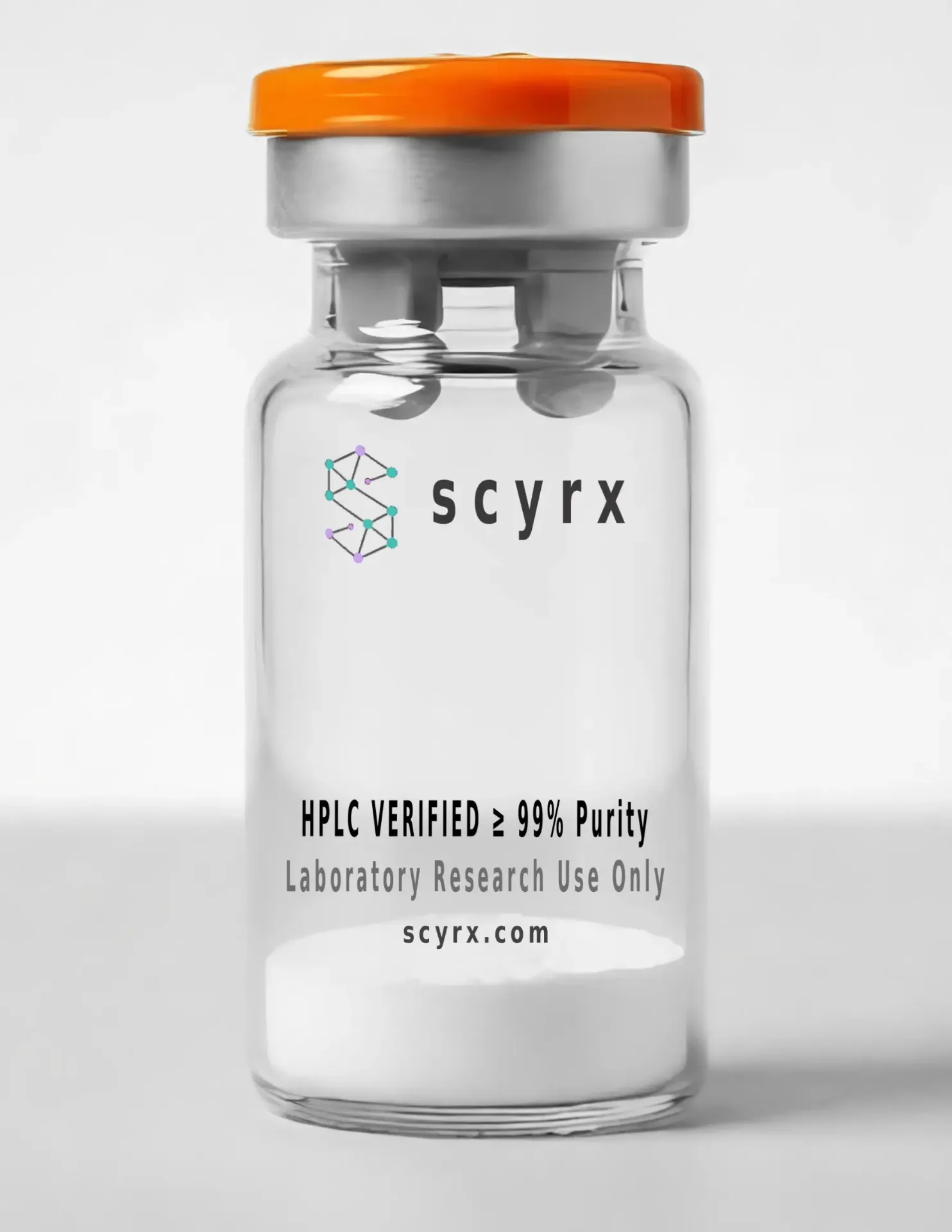
Our Tirzepatide is a synthetic dual GLP-1 / GIP receptor agonist synthesized to >99% HPLC purity for incretin and metabolic research models. Frequently referred to in laboratory shorthand as Tirz or by its vial-size abbreviations like Tirz5, Tirz10, and Tirz20, this 39-amino-acid compound is studied for satiety pathways, insulin signaling, and glucose homeostasis in controlled laboratory investigations alongside complementary incretin research compounds for receptor-comparison studies.
99% HPLC Purity · For Laboratory Research Use Only
Key Research Findings (At a Glance)
| Parameter | Summary |
|---|---|
| Peptide Structure | 39 amino acids (modified dual-agonist with two Aib substitutions and C20 fatty diacid) |
| Origin | Synthetic GLP-1 and GIP receptor agonist ("twincretin") |
| Primary Mechanism | Appetite suppression + insulin sensitization (dual-pathway synergy) |
| Key Research Areas | Obesity, Type 2 Diabetes (T2DM), insulin resistance, energy balance |
| Distinguishing Feature | Superior GI tolerability compared to GLP-1-only agonists |
| Key Differentiator from GLP-1s | GIP pathway enhances insulin sensitivity while moderating nausea |
| Common Research Vials | 5mg, 10mg, 15mg, 20mg (often searched as Tirz5, Tirz10, Tirz15, Tirz20) |
| Typical Administration | Subcutaneous injection (weekly) |
| Intended Use | Laboratory research only – not for human or veterinary consumption |
Overview
Researchers who buy research-grade Tirzepatide are working with a novel, long-acting synthetic peptide (development code LY3298176) engineered as a dual receptor agonist. It simultaneously targets the glucose-dependent insulinotropic polypeptide (GIP) and glucagon-like peptide-1 (GLP-1) receptors with balanced affinity. Frequently abbreviated in laboratory shorthand as Tirz, or by specific vial sizes like Tirz5, Tirz10, Tirz15, and Tirz20, this compound has completed extensive Phase 3 clinical trials (the SURMOUNT and SURPASS programs) and is FDA-approved for type 2 diabetes (as Mounjaro) and obesity (as Zepbound).
While single agonists (like Semaglutide) focus primarily on appetite suppression, Tirzepatide adds a second pathway: GIP receptor activation. This dual-action approach not only reduces caloric intake but also improves insulin sensitivity in adipose tissue and may help moderate the gastrointestinal side effects commonly associated with GLP-1-only compounds. The result is a compound that produces substantial weight loss with potentially better tolerability than older single-pathway agents.
Tirzepatide is a synthetic, unimolecular dual agonist targeting both the GIP and GLP-1 receptors. The customized, 39-amino-acid peptide backbone—derived from native GIP—is conjugated to a C20 fatty diacid moiety that facilitates a prolonged systemic half-life and optimizes binding to serum albumin. Two non-coded aminoisobutyric acid (Aib) residues confer resistance to DPP-4 enzymatic degradation, protecting the peptide from rapid breakdown. At position 20, the lysine residue is conjugated to a C20 fatty diacid side chain via a γ-glutamic acid spacer and two AEEA linkers – a modification that enables high-affinity reversible binding to serum albumin, creating a drug reservoir that extends the peptide's half-life to approximately one week. This balance of structural fidelity and pharmacological durability has established Tirzepatide as a leading clinically validated dual agonist in incretin-based metabolic research.
Mechanism of Action: Dual Incretin Pathways
GLP-1 Receptor Agonism (Appetite and Glycemic Control)
Activation of GLP-1 receptors stimulates glucose-dependent insulin secretion from pancreatic beta cells, suppresses inappropriate glucagon release, delays gastric emptying, and promotes satiety signaling in the hypothalamus. These effects drive a significant reduction in caloric intake and improve glycemic control without increasing the risk of hypoglycemia in non-diabetic models.
GIP Receptor Agonism (Insulin Sensitization and Tolerability)
The second pathway, GIP receptor activation, enhances insulin secretion in response to meals and improves insulin sensitivity in adipose (fat) tissue. Importantly, GIP signaling appears to moderate some of the gastrointestinal side effects (like nausea) typically associated with GLP-1 receptor activation. This dual-pathway synergy allows Tirzepatide to produce robust metabolic improvements while maintaining better tolerability than GLP-1-only agonists in many research models.
Synergistic Metabolic Effects
The balanced dual-agonist design allows Tirzepatide to simultaneously reduce caloric intake (via GLP-1-mediated satiety) and improve insulin sensitivity (via GIP-mediated adipose tissue effects). This synergistic action produces superior metabolic outcomes compared to single-pathway agonists, making it a primary compound of interest for investigating obesity, type 2 diabetes, and metabolic syndrome.
Why Researchers Choose Tirzepatide Over Single Agonists or Triple Agonists
Versus Semaglutide (GLP-1 Only): Semaglutide is highly effective at reducing appetite, but it frequently causes significant gastrointestinal side effects (nausea, vomiting) that can limit research compliance. Tirzepatide's addition of GIP receptor agonism appears to moderate these effects, resulting in better overall tolerability in clinical trials. Additionally, Tirzepatide produces greater total weight loss (~20-22% at 72 weeks) compared to semaglutide (~15-17% at 68 weeks) in head-to-head trial data.
Versus Retatrutide (GLP-1/GIP/Glucagon Triple): Retatrutide adds a third pathway (glucagon) that actively increases energy expenditure and burns liver fat, potentially producing even greater weight loss (~24% at 48 weeks). However, Retatrutide is still investigational and carries a risk of transient increased heart rate. Tirzepatide, by contrast, is FDA-approved with a more established safety profile and extensive Phase 3 data, making it the preferred choice for researchers prioritizing clinical validation and tolerability.
Versus Traditional Weight Loss Research Models: Older research compounds often target only one pathway (e.g., just appetite suppression). Tirzepatide provides a dual-pathway approach that mirrors the complexity of human metabolic dysfunction, offering a middle ground between the single-pathway simplicity of sema and the triple-pathway complexity of reta.
Tirzepatide's 39-amino-acid framework incorporates two Aib substitutions that confer DPP-4 resistance and a C20 fatty diacid conjugated to Lys20 via γ-Glu and AEEA linkers that enables strong albumin binding and a ~1-week half-life. This balanced dual-agonist design – combining GLP-1-mediated satiety with GIP-mediated insulin sensitization and improved gastrointestinal tolerability – positions Tirzepatide as the clinically validated middle ground between the single-pathway simplicity of Semaglutide and the triple-pathway complexity of the investigational Retatrutide.
Primary Research Applications
- Obesity and body composition modeling (fat mass reduction)
- Type 2 Diabetes Mellitus (T2DM) and glycemic control research
- Insulin resistance and adipose tissue sensitivity studies
- Gastrointestinal tolerability comparisons (versus GLP-1-only agonists)
- Cardiovascular risk marker reduction (HbA1c, triglycerides, blood pressure)
- Comparative incretin-pathway studies (single vs. dual vs. triple agonists)
- Long-term metabolic sustainability and weight maintenance
Tirzepatide vs. Semaglutide vs. Retatrutide: Comparative Metabolic Analysis
Researchers frequently compare these three compounds to understand the trade-offs between mechanism complexity, efficacy, and tolerability across incretin-based metabolic protocols.
| Feature | Tirzepatide (Tirz) | Semaglutide (Sema) | Retatrutide (Reta) |
|---|---|---|---|
| Receptor Targets | GLP-1, GIP (Dual) | GLP-1 (Single) | GLP-1, GIP, Glucagon (Triple) |
| Mechanism Complexity | Dual-pathway (appetite suppression + insulin sensitization) | Single-pathway (appetite suppression + insulin sensitization) | Multi-pathway (appetite suppression + increased energy expenditure) |
| Weight Loss Potential (Research Data) | Very High (~20-22% at 72 weeks in Phase 3) | High (~15-17% at 68 weeks in Phase 3) | Highest (~24% at 48 weeks in Phase 2) |
| Hepatic Fat Reduction | Moderate | Mild to Moderate | Strong (glucagon-mediated lipid oxidation) |
| Common Minor Side Effects (Research Models) | Nausea, diarrhea, generally well-tolerated | Nausea, vomiting, GI distress, potential muscle mass loss | Nausea, transient increased heart rate, GI distress |
| Clinical Development Stage | FDA-approved (Mounjaro, Zepbound) | FDA-approved (Ozempic, Wegovy) | Phase 3 trials ongoing |
| Research Status | Approved for medical use | Approved for medical use | Investigational (not approved for human use) |
Note: Clinical data for Tirzepatide is from completed Phase 3 trials (SURMOUNT and SURPASS programs). Results may vary based on dosage (e.g., Tirz5 vs Tirz15 protocols), duration, and individual metabolic factors. Tirzepatide is available in both approved pharmaceutical formulations and research-grade lyophilized powder.
Product Specifications
Chemical Specifications (Acetate Salt)
| Specification | Value |
|---|---|
| Synonyms | Tirzepatide, Tirz, LY3298176, Twincretin, Dual Agonist |
| Peptide Sequence | Tyr-Aib-Glu-Gly-Thr-Phe-Thr-Ser-Asp-Tyr-Ser-Ile-Aib-Leu-Asp-Lys-Ile-Ala-Gln-[Lys(diacid-γ-Glu-(AEEA)₂)]-Ala-Phe-Val-Gln-Trp-Leu-Ile-Ala-Gly-Gly-Pro-Ser-Ser-Gly-Ala-Pro-Pro-Pro-Ser-NH₂ |
| Number of Amino Acids | 39 |
| Key Structural Notes | Contains two Aib (α-aminoisobutyric acid) substitutions; Lysine at position 20 bears the C20 fatty diacid side chain via γ-Glu and two AEEA linkers |
| Structural Modification Overview | DPP-4 Resistance: Aib substitutions protect against enzymatic degradation. Extended Half-Life: C20 fatty diacid + γ-Glu + AEEA linkers enable strong albumin binding, extending half-life to ~1 week |
| Base Chain | 39-amino-acid linear synthetic peptide derived from native GIP |
| Molecular Formula | C₂₂₇H₃₅₂N₄₈O₇₀ (C₂₂₅H₃₄₈N₄₈O₆₈ · C₂H₄O₂) |
| Molecular Weight | 4873.5 g/mol |
| SMILES | The IUPAC structure is extraordinarily complex due to the attached fatty di-acid chain and linkers, and is best accessed via the PubChem Structure Data Page. |
| Peptide Length | 39 amino acids |
| Purity | ≥99% by HPLC |
| Form | Lyophilized white powder (Acetate Salt) |
Note: Formulation ratios and purity metrics may vary by batch. Always refer to the batch-specific Certificate of Analysis (COA) included with your order for exact composition and laboratory-verified specifications.
Tirzepatide: Acetate Salt vs. Free Base Comparison for Researchers
For researchers reviewing the literature, Tirzepatide is available as both a freebase and an acetate salt form. The acetate salt form is the standard research-grade version supplied by SCYRX, offering enhanced solubility and stability for laboratory applications. The freebase reference data is provided below for comparative literature review purposes only.
| Specification | Acetate Salt (SCYRX Supply) | Free Base (Reference Only) |
|---|---|---|
| Number of Amino Acids | 39 | 39 |
| Molecular Formula | C₂₂₇H₃₅₂N₄₈O₇₀ (C₂₂₅H₃₄₈N₄₈O₆₈ · C₂H₄O₂) | C₂₂₅H₃₄₈N₄₈O₆₈ |
| Molecular Weight | 4873.5 g/mol | 4813.45 g/mol |
| CAS Number | 2931515-08-9 | 2023788-19-2 |
| PubChem CID | 163285896 | 156588324 |
| Form | Acetate Salt | Free Base |
Note: Molecular weights for acetate salt forms are approximate and may vary depending on the number of bound acetate molecules (x) in the salt complex. Values provided are based on the peptide core plus acetate counterions and should be used as a reference for research purposes only. Always refer to the batch-specific Certificate of Analysis (COA) for exact molecular weight verification.
Storage and Stability
| Condition | Recommendation |
|---|---|
| Long-term storage (lyophilized) | −20°C in tightly sealed container, protected from light and moisture – stable for up to 24 months |
| Shipping | Room temperature (15–25°C) for short periods (up to two weeks) – no significant degradation |
| After reconstitution | Refrigerate at 2–8°C; use within 28 days |
| Handling precautions | Avoid repeated freeze-thaw cycles and vigorous shaking to maintain peptide integrity |
Research Protocol Considerations
Tirzepatide is typically reconstituted with bacteriostatic water. Like Retatrutide, Tirzepatide protocols utilize milligram (mg) quantities. Because it is administered in milligram amounts (ranging from lower 2.5mg-5mg protocols to higher 10mg-15mg protocols reported in advanced trials), researchers typically use reconstitution volumes of 1–3 mL to allow for precise measurement with standard insulin syringes. Clinical trials utilize weekly subcutaneous administration with gradual dose escalation (typically in 2.5mg increments) to assess gastrointestinal tolerance.
Investigators studying comprehensive metabolic protocols often research Tirzepatide alongside other metabolic compounds such as Retatrutide (for comparative triple-agonist studies), Semaglutide (for GLP-1-only comparisons), or mitochondrial support compounds like SS-31, depending on the specific metabolic endpoints being evaluated.
Dose Escalation Reference (Published Clinical Trial Data)
- Starter Phase (Weeks 1–4): 2.5 mg weekly subcutaneous administration, used in published SURMOUNT/SURPASS protocols to assess initial gastrointestinal tolerance before escalation.
- Escalation Phase (Weeks 5–20): Stepwise increases in 2.5 mg increments every four weeks (5 mg → 7.5 mg → 10 mg → 12.5 mg) to evaluate dose-dependent metabolic endpoints while maintaining tolerability.
- Maintenance Phase (Week 20+): Stable weekly maintenance dose of 5 mg, 10 mg, or 15 mg, selected per study endpoint. Schedules are derived from published clinical trial data and are provided for protocol design reference only.
Tirzepatide Research FAQ
Q: Is Tirzepatide approved for human use in research quantities?
A: Research-grade Tirzepatide is distinct from FDA-approved pharmaceutical formulations such as Mounjaro and Zepbound. While Tirzepatide as an active pharmaceutical ingredient has received FDA approval for type 2 diabetes (Mounjaro) and obesity (Zepbound), research-grade Tirzepatide is supplied as a lyophilized powder for laboratory research purposes only. It is not approved for human or veterinary consumption in this form and is not a substitute for any FDA-approved medication. Researchers should consult all applicable institutional and regulatory guidelines before initiating study protocols.
Q: What is the primary difference between Tirzepatide (Tirz) and Semaglutide (Sema)?
A: Tirzepatide is a dual agonist targeting both GLP-1 and GIP receptors, while Semaglutide is a single agonist targeting only GLP-1 receptors. The addition of GIP receptor agonism in Tirzepatide has been shown to produce superior weight loss (~20-22% vs ~15-17%), improved glycemic control, and enhanced gastrointestinal tolerability compared to GLP-1-only compounds. GIP appears to moderate the nausea commonly associated with GLP-1 receptor activation.
Q: How does Tirzepatide compare to Retatrutide (Reta)?
A: Tirzepatide is a dual agonist (GLP-1, GIP), while Retatrutide is a triple agonist (GLP-1, GIP, glucagon). The addition of glucagon receptor agonism in Reta is designed to increase energy expenditure and hepatic lipid oxidation, which early data suggests may lead to greater total weight loss (~24% vs ~20-22%). However, Retatrutide is still investigational and carries a risk of transient increased heart rate, while Tirzepatide is FDA-approved with a more established safety profile and extensive Phase 3 clinical data.
Q: Can Tirzepatide be stacked with Semaglutide or Retatrutide in research protocols?
A: Generally, no. Because Tirzepatide already strongly activates both GLP-1 and GIP receptors, adding Semaglutide (a GLP-1 agonist) would be redundant and would significantly increase the risk of severe gastrointestinal side effects. Adding Retatrutide (which also activates GLP-1 and GIP) would similarly be redundant and could amplify side effects without providing proportional benefits. Researchers typically study them as comparative alternatives rather than stacking them together.
Q: How does Tirzepatide dosing escalate in research protocols?
A: In published clinical trial literature from the SURMOUNT and SURPASS programs, Tirzepatide dosing typically follows a gradual escalation schedule to assess gastrointestinal tolerance. Starting doses of 2.5mg weekly are reported, escalating in 2.5mg increments every four weeks to maintenance doses of 5mg, 10mg, or 15mg weekly. This stepwise approach is designed to evaluate dose-dependent metabolic endpoints. These schedules are derived from published clinical trial data and are provided for protocol design reference only.
Q: What is the primary difference between Tirzepatide, Semaglutide, and Retatrutide?
A: These three compounds represent successive generations of incretin-based metabolic research. Semaglutide is a single GLP-1 receptor agonist primarily targeting appetite suppression and glycemic control. Tirzepatide is a dual GLP-1/GIP agonist adding insulin sensitization with potentially better gastrointestinal tolerability. Retatrutide is a triple GLP-1/GIP/glucagon agonist that adds direct thermogenic effects, potentially increasing energy expenditure. Tirzepatide occupies the middle ground, offering superior weight loss to Semaglutide (~20-22% vs ~15-17%) while having a more established safety profile than the investigational Retatrutide.
Scientific References and Citations
- Jastreboff AM, Aronne LL, Ahmad NN, et al. Tirzepatide once weekly for the treatment of obesity. N Engl J Med. 2022;387(3):205-216. doi:10.1056/NEJMoa2206038
- Frias JP, Davies MJ, Rosenstock J, et al. Tirzepatide versus semaglutide once weekly in patients with type 2 diabetes. N Engl J Med. 2021;385(6):503-515. doi:10.1056/NEJMoa2107519
- Minno AM, Lu J, Handing RP, et al. Discovery of the dual incretin receptor agonist tirzepatide. Nat Rev Drug Discov. 2022;21(7):515-533. doi:10.1038/s41573-022-00460-y
- Rosenstock J, Wysham C, Frias JP, et al. Efficacy and safety of a novel dual GIP and GLP-1 receptor agonist tirzepatide in patients with type 2 diabetes (SURPASS-1): a double-blind, randomised, phase 3 trial. Lancet. 2021;398(10295):143-155. doi:10.1016/S0140-6736(21)01319-8
- Aronne LL, Hill D, Davies M, et al. Tirzepatide versus insulin degludec in the SURPASS-5 trial for type 2 diabetes. N Engl J Med. 2022;387(12):1100-1111. doi:10.1056/NEJMoa2202778
- Davies M, Faurby M, Hansen TB, et al. Tirzepatide in patients with type 2 diabetes and moderate renal impairment (SURPASS-6). Diabetes Obes Metab. 2023;25(4):1047-1058. doi:10.1111/dom.14944