
Research Context
Our Retatrutide is synthesized to >99% HPLC purity for advanced incretin-pathway research protocols. Frequently referred to in laboratory shorthand as Reta or by its vial-size abbreviations like RT10, RT20, and RT30, this triple-agonist compound is investigated at the GLP-1, GIP, and glucagon receptors for its mechanistic profile in energy balance, glucose regulation, and adipose-signaling endpoints under controlled study designs.
99% HPLC Purity · For Laboratory Research Use Only
Key Research Findings (At a Glance)
| Parameter | Summary |
|---|---|
| Peptide Structure | 39 amino acids (modified triple-agonist) |
| Origin | Synthetic GLP-1, GIP, and Glucagon receptor agonist |
| Primary Mechanism | Appetite suppression + increased energy expenditure (thermogenesis) |
| Key Research Areas | Obesity, Type 2 Diabetes (T2DM), MASLD, energy balance |
| Distinguishing Feature | Glucagon agonism actively burns calories and liver fat |
| Key Differentiator from GLP-1s | Counters metabolic fatigue and fat-loss plateaus seen in single agonists |
| Common Research Vials | 10mg, 20mg, 30mg, 60mg (often searched as RT10, RT20, RT30, RT60) |
| Typical Administration | Subcutaneous injection (weekly) |
| Intended Use | Laboratory research only – not for human or veterinary consumption |
Overview
Retatrutide (development code LY3437943) is a novel, long-acting synthetic peptide engineered as a triple receptor agonist. It simultaneously targets the glucose-dependent insulinotropic polypeptide (GIP), glucagon-like peptide-1 (GLP-1), and glucagon receptors. Frequently abbreviated in laboratory shorthand as Reta, RT, or by specific vial sizes like RT10, RT20, RT30, and RT60, this compound is currently the focus of extensive Phase 2 and Phase 3 clinical trials investigating its efficacy in obesity, type 2 diabetes, and metabolic dysfunction-associated steatotic liver disease (MASLD).
While compared to single GLP-1 agonists like Semaglutide, which suppress appetite, and dual agonists such as Tirzepatide, which improve insulin sensitivity, Retatrutide adds a third pathway: glucagon receptor activation.
This unique addition actively increases energy expenditure (thermogenesis) and promotes the breakdown of liver fat. Laboratories looking to buy research-grade Retatrutide often cite early clinical data suggesting this triple-action approach may produce superior weight loss and metabolic improvements compared to existing single or dual agonists.
Because it addresses both sides of the energy balance equation—reducing calories in (via GLP-1/GIP) and increasing calories out (via glucagon)—Retatrutide is widely considered the next major evolution in metabolic research.
It is heavily studied for its potential to overcome the weight-loss plateaus and metabolic slowdowns often observed with older, single-pathway compounds.
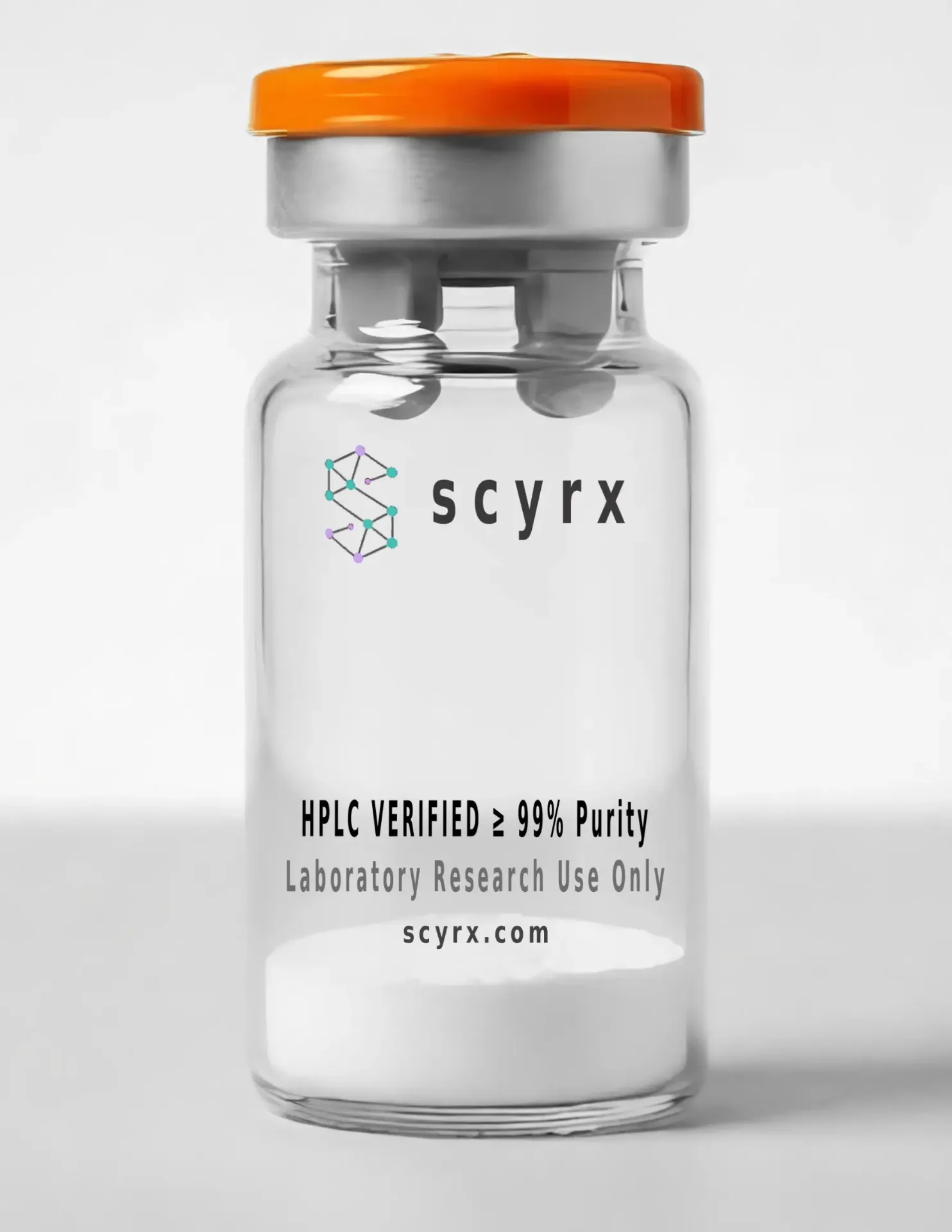
Research-grade Retatrutide for sale is supplied as a lyophilized powder for laboratory study only.
Mechanism of Action: Triple Agonist Pathways
GLP-1 and GIP Receptor Agonism (Appetite and Insulin)
Activation of GLP-1 and GIP receptors works synergistically to improve metabolic markers. GLP-1 delays gastric emptying and signals the brain to reduce food intake, while GIP enhances insulin secretion in response to meals and improves insulin sensitivity in fat tissue. Together, they create a powerful foundation for glycemic control and appetite suppression.
Glucagon Receptor Agonism (Energy Expenditure)
The defining feature of Retatrutide is its activation of the glucagon receptor. In the liver, this pathway stimulates thermogenesis (burning calories for heat) and promotes hepatic fatty acid oxidation (breaking down fat for fuel). This mechanism actively increases the body's basal metabolic rate, helping to counteract the metabolic slowdown that typically occurs during caloric restriction.
Hepatic Fat Reduction (MASLD Modeling)
Because glucagon directly targets the liver to burn stored fat, Retatrutide is heavily researched for its ability to clear ectopic fat. Studies demonstrate profound reductions in liver fat content, making it a primary compound of interest for investigating metabolic dysfunction-associated steatotic liver disease (MASLD, formerly known as NAFLD).
Why Researchers Choose Retatrutide Over Single or Dual Agonists
Versus Semaglutide (GLP-1 Only): Semaglutide is highly effective at reducing appetite, but the resulting caloric deficit often causes the body to slow its metabolism (metabolic adaptation) and lose lean muscle mass. Retatrutide's glucagon pathway keeps the metabolic rate elevated, promoting fat loss while helping to preserve energy levels and potentially mitigating the "GLP-1 fatigue" reported in sema models.
Versus Tirzepatide (GLP-1/GIP Dual): Tirzepatide offers excellent weight loss and gastrointestinal tolerability by combining appetite suppression with insulin sensitization. However, it lacks the direct thermogenic (calorie-burning) drive of glucagon. In early Phase 2 trials, Retatrutide demonstrated a higher total percentage of body weight lost compared to historical tirzepatide data, largely attributed to this increased energy expenditure.
Versus Traditional Weight Loss Research Models: Older research compounds often target only one pathway (e.g., just appetite suppression). Retatrutide provides a comprehensive, multi-pathway approach that mirrors the complexity of human metabolic dysfunction, making it the most advanced tool available for studying obesity and lipid metabolism.
Primary Research Applications
- Obesity and body composition modeling (fat mass vs. lean mass)
- Type 2 Diabetes Mellitus (T2DM) and insulin resistance research
- Metabolic dysfunction-associated steatotic liver disease (MASLD/NAFLD)
- Energy expenditure, thermogenesis, and basal metabolic rate (BMR) studies
- Hepatic lipid oxidation and triglyceride reduction
- Comparative incretin-pathway studies (single vs. dual vs. triple agonists)
- Overcoming weight-loss plateaus and metabolic adaptation
Retatrutide vs. Tirzepatide vs. Semaglutide: Comparative Metabolic Analysis
Researchers frequently compare these three compounds to understand the trade-offs between mechanism complexity, efficacy, and tolerability across incretin-based metabolic protocols.
| Feature | Retatrutide (Reta) | Tirzepatide (Tirz) | Semaglutide (Sema) |
|---|---|---|---|
| Receptor Targets | GLP-1, GIP, Glucagon (Triple) | GLP-1, GIP (Dual) | GLP-1 (Single) |
| Mechanism Complexity | Multi-pathway (appetite suppression + increased energy expenditure) | Dual-pathway (appetite suppression + insulin sensitization) | Single-pathway (appetite suppression + insulin sensitization) |
| Weight Loss Potential (Research Data) | Highest (~24% at 48 weeks in Phase 2) | Very High (~20-22% at 72 weeks in Phase 3) | High (~15-17% at 68 weeks in Phase 3) |
| Hepatic Fat Reduction | Strong (glucagon-mediated lipid oxidation) | Moderate | Mild to Moderate |
| Common Minor Side Effects (Research Models) | Nausea, transient increased heart rate, GI distress | Nausea, diarrhea, generally well-tolerated | Nausea, vomiting, GI distress, potential muscle mass loss |
| Clinical Development Stage | Phase 3 trials ongoing | FDA-approved (Mounjaro, Zepbound) | FDA-approved (Ozempic, Wegovy) |
| Research Status | Investigational (not approved for human use) | Approved for medical use | Approved for medical use |
Note: Clinical data for Retatrutide is from early-phase trials. Results may vary based on dosage (e.g., RT10 vs RT30 protocols), duration, and individual metabolic factors. Retatrutide is intended for research purposes only and is not approved for human consumption.
Retatrutide Chemical Specifications (Acetate Salt)
| Specification | Value |
|---|---|
| Synonyms | Retatrutide, Reta, RT, LY3437943, Triple Agonist |
| Peptide Sequence | Tyr-Aib-Gln-Gly-Thr-Phe-Thr-Ser-Asp-Tyr-Ser-Ile-α-Me-Leu-Leu-AspLys-Ala-Gln-Aib-Ala-Phe-Ile-Glu-Tyr-Leu-Leu-Glu-Gly-Gly-Pro-Ser-Ser-Gly-Ala-Pro-Pro-ProSer-NH2 |
| Number of Amino Acids | 39 |
| Molecular Formula | C₂₂₁H₃₄₂N₄₆O₆₈ · (C₂H₄O₂)ₓ |
| Molecular Weight | ~4,791.38 g/mol |
| SMILES | CC[C@H](C)C(C(=O)N[C@@H](CCC(=O)O)C(=O)N[C@@H](CC1=CC=C(C=C1)O)C(=O)N[C@@H](CC(C)C)C(=O)N[C@@H](CC(C)C)C(=O)N[C@@H](CCC(=O)O)C(=O)NCC(=O)NCC(=O)N2CCC[C@H]2C(=O)N[C@@H](CO)C(=O)N[C@@H](CO)C(=O)NCC(=O)N[C@@H](C)C(=O)N3CCC[C@H]3C(=O)N4CCC[C@H]4C(=O)N5CCC[C@H]5C(=O)N[C@@H](CO)C(=O)N)NC(=O)[C@H](CC6=CC=CC=C6)NC(=O)[C@H](C)NC(=O)C(C)(C)NC(=O)[C@H](CCC(=O)N)NC(=O)[C@H](C)NC(=O)[C@H](CCCCNC(=O)COCCOCCNC(=O)CC[C@@H](C(=O)O)NC(=O)CCCCCCCCCCCCCCCCCCC(=O)O)NC(=O)[C@H](CCCCN)NC(=O)[C@H](CC(=O)O)NC(=O)[C@H](CC(C)C)NC(=O)[C@@](C)(CC(C)C)NC(=O)C([C@@H](C)CC)NC(=O)[C@H](CO)NC(=O)[C@H](CC7=CC=C(C=C7)O)NC(=O)[C@H](CC(=O)O)NC(=O)[C@H](CO)NC(=O)[C@H]([C@@H](C)O)NC(=O)[C@H](CC8=CC=CC=C8)NC(=O)[C@H]([C@@H](C)O)NC(=O)CNC(=O)[C@H](CCC(=O)N)NC(=O)C(C)(C)NC(=O)[C@H](CC9=CC=C(C=C9)O)N |
| SMILES Note | SMILES string may or may not include the acetate counterion. Full structural details are available via PubChem CID 171390338. |
| Purity | ≥99% by HPLC |
| Form | Lyophilized white powder (Acetate Salt) |
Note: Formulation ratios and purity metrics may vary by batch. Always refer to the batch-specific Certificate of Analysis (COA) included with your order for exact composition and laboratory-verified specifications.
Retatrutide: Acetate Salt vs. Free Base Comparison for Researchers
For researchers reviewing the literature, Retatrutide is available as both a freebase and an acetate salt form. The acetate salt form is the standard research-grade version supplied by SCYRX, offering enhanced solubility and stability for laboratory applications. The freebase reference data is provided below for comparative literature review purposes only.
| Specification | Acetate Salt (SCYRX Supply) | Free Base (Reference Only) |
|---|---|---|
| Number of Amino Acids | 39 | 39 |
| Molecular Formula | C₂₂₁H₃₄₂N₄₆O₆₈ · (C₂H₄O₂)ₓ | C₂₂₁H₃₄₂N₄₆O₆₈ |
| Molecular Weight | ~4,791.38 g/mol | 4,731.33 g/mol |
| CAS Number | 2381089-83-2 | 2381089-83-2 |
| PubChem CID | 171390338 | 171390338 |
| Form | Acetate Salt | Free Base |
Note: Molecular weights for acetate salt forms are approximate and may vary depending on the number of bound acetate molecules (x) in the salt complex. Values provided are based on the peptide core plus acetate counterions and should be used as a reference for research purposes only. Always refer to the batch-specific Certificate of Analysis (COA) for exact molecular weight verification.
Storage and Stability
| Condition | Recommendation |
|---|---|
| Long-term storage (lyophilized) | −20°C in tightly sealed container, protected from light and moisture – stable for up to 24 months |
| Shipping | Room temperature (15–25°C) for short periods (up to two weeks) – no significant degradation |
| After reconstitution | Refrigerate at 2–8°C; use within 28 days |
| Handling precautions | Avoid repeated freeze-thaw cycles and vigorous shaking to maintain peptide integrity |
Research Protocol Considerations
Retatrutide is typically reconstituted with bacteriostatic water. Unlike the neuro-peptides that are dosed in micrograms, Retatrutide protocols utilize milligram (mg) quantities. Because it is administered in milligram amounts (ranging from lower 2mg-4mg protocols to higher 8mg-12mg protocols reported in advanced trials), researchers typically use reconstitution volumes of 1–3 mL to allow for precise measurement with standard insulin syringes. Clinical trials utilize weekly subcutaneous administration with gradual dose escalation to assess gastrointestinal tolerance.
Investigators studying comprehensive metabolic protocols often research Retatrutide alongside mitochondrial support compounds like SS-31, or alongside metabolic regulators to study synergistic effects on cellular energy and lipid metabolism.
Dose Escalation Protocols Reported in Clinical Trials
In published clinical trial literature (Phase 2 data), Retatrutide dosing typically follows a gradual escalation schedule. Starting doses of 2mg weekly are reported, escalating to 4mg, then 8mg, with maintenance doses of 8mg or 12mg weekly. This stepwise approach is designed to assess gastrointestinal tolerance and monitor for transient heart rate changes. These schedules are derived from published data and provided for protocol design reference only.
Retatrutide Research FAQ
Q: Is Retatrutide approved for human use in research quantities?
A: Research-grade Retatrutide is currently in Phase 3 clinical trials and is not approved for human or veterinary use by the FDA or any other major regulatory body. It is supplied as a lyophilized powder for laboratory research purposes only. It is not a substitute for any FDA-approved medication. Researchers should consult all applicable institutional and regulatory guidelines before initiating study protocols.
Q: Does Retatrutide cause the metabolic fatigue seen with Semaglutide?
A: A common observation in single GLP-1 agonist research is a drop in basal metabolic rate and reported fatigue due to caloric restriction. Retatrutide's glucagon receptor activation actively stimulates thermogenesis and energy expenditure, which may help counteract this metabolic slowdown. Early-phase clinical data suggests that while gastrointestinal side effects remain present, the glucagon pathway may help maintain energy levels during caloric deficit. This remains an active area of comparative research.
Q: What is the primary difference between Retatrutide and Tirzepatide?
A: Retatrutide is a triple agonist (GLP-1, GIP, glucagon), while Tirzepatide is a dual agonist (GLP-1, GIP). The addition of glucagon receptor agonism in Retatrutide is designed to increase energy expenditure and hepatic lipid oxidation. Early Phase 2 data suggests this triple activation may lead to greater total weight loss (~24% at 48 weeks) compared to dual agonists. However, Retatrutide remains investigational, while Tirzepatide has completed Phase 3 trials and received FDA approval.
Q: Can Retatrutide be stacked with Semaglutide or Tirzepatide in research protocols?
A: Generally, no. Because Retatrutide already strongly activates the GLP-1 and GIP receptors, adding Semaglutide (a GLP-1 agonist) or Tirzepatide (a GLP-1/GIP agonist) would be redundant and would significantly increase the risk of severe gastrointestinal side effects without providing additional benefits. Researchers typically study them as comparative alternatives rather than stacking them together.
Q: How does Retatrutide dosing escalate in research protocols?
A: In published clinical trial literature (Phase 2 data), Retatrutide dosing typically follows a gradual escalation schedule to assess gastrointestinal tolerance. Starting doses of 2mg weekly are reported, escalating to 4mg, then 8mg, with maintenance doses of 8mg or 12mg weekly. This stepwise approach is designed to monitor for transient heart rate changes and evaluate dose-dependent metabolic endpoints. These schedules are derived from published clinical trial data and are provided for protocol design reference only.
Q: What is the primary difference between Retatrutide, Tirzepatide, and Semaglutide?
A: These three compounds represent successive generations of incretin-based metabolic research. Semaglutide is a single GLP-1 receptor agonist primarily targeting appetite suppression and glycemic control. Tirzepatide is a dual GLP-1/GIP agonist adding insulin sensitization with potentially better gastrointestinal tolerability. Retatrutide is a triple GLP-1/GIP/glucagon agonist that adds direct thermogenic effects, potentially increasing energy expenditure. Retatrutide shows the highest weight loss potential (~24% at 48 weeks) but remains investigational with a less established safety profile than the FDA-approved alternatives.
Q: How does Retatrutide differ from Semaglutide for research applications?
A: Semaglutide is a single GLP-1 receptor agonist that serves as the foundational reference standard for incretin research. It is FDA-approved (as Ozempic and Wegovy) with extensive long-term safety data and cardiovascular outcome evidence. Retatrutide, by contrast, is a triple GLP-1/GIP/glucagon agonist that adds direct thermogenic effects and increased energy expenditure. While early Phase 2 data suggests Retatrutide may produce greater weight loss (~24% at 48 weeks), it remains investigational. Researchers choose Semaglutide for baseline comparator studies and Retatrutide for multi-pathway metabolic research. For detailed information on the reference standard, see our Semaglutide research page.
Scientific References and Citations
- Jastreboff AM, Aronne LJ, Ahmad NN, et al. Triple-Hormone-Receptor Agonist Retatrutide for Obesity - A Phase 2 Trial. N Engl J Med. 2023;389(6):514-526. doi:10.1056/NEJMoa2301972
- Sanyal AJ, Kaplan LM, Frias JP, et al. Triple hormone receptor agonist retatrutide for metabolic dysfunction-associated steatotic liver disease: A randomized phase 2a trial. Nat Med. 2024;30(7):2037-2048. doi:10.1038/s41591-024-03018-2
- Urva S, Coskun T, Loh MT, et al. LY3437943, a novel triple GIP, GLP-1, and glucagon receptor agonist in people with type 2 diabetes: A phase 1b, multicentre, double-blind, placebo-controlled, randomised, multiple-ascending dose trial. Lancet. 2022;400(10366):1869-1881. doi:10.1016/S0140-6736(22)02033-5
- Abouelmagd AA, Abdelrehim AM, Bashir MN, et al. Efficacy and safety of retatrutide, a novel GLP-1, GIP, and glucagon receptor agonist for obesity treatment: A systematic review and meta-analysis of randomized controlled trials. Pharmacol Res. 2024;190:106789. doi:10.1016/j.phrs.2024.106789
- Conceição-Furber E, Coskun T, Sloop KW, Samms RJ. Is glucagon receptor activation the thermogenic solution for treating obesity? Front Endocrinol. 2022;13:868037. doi:10.3389/fendo.2022.868037
- Holst JJ, Knop FK. GLP-1 and the neurobiology of eating control: Recent advances. Nat Rev Endocrinol. 2023;19(3):157-171. doi:10.1038/s41574-022-00738-1