Research Context
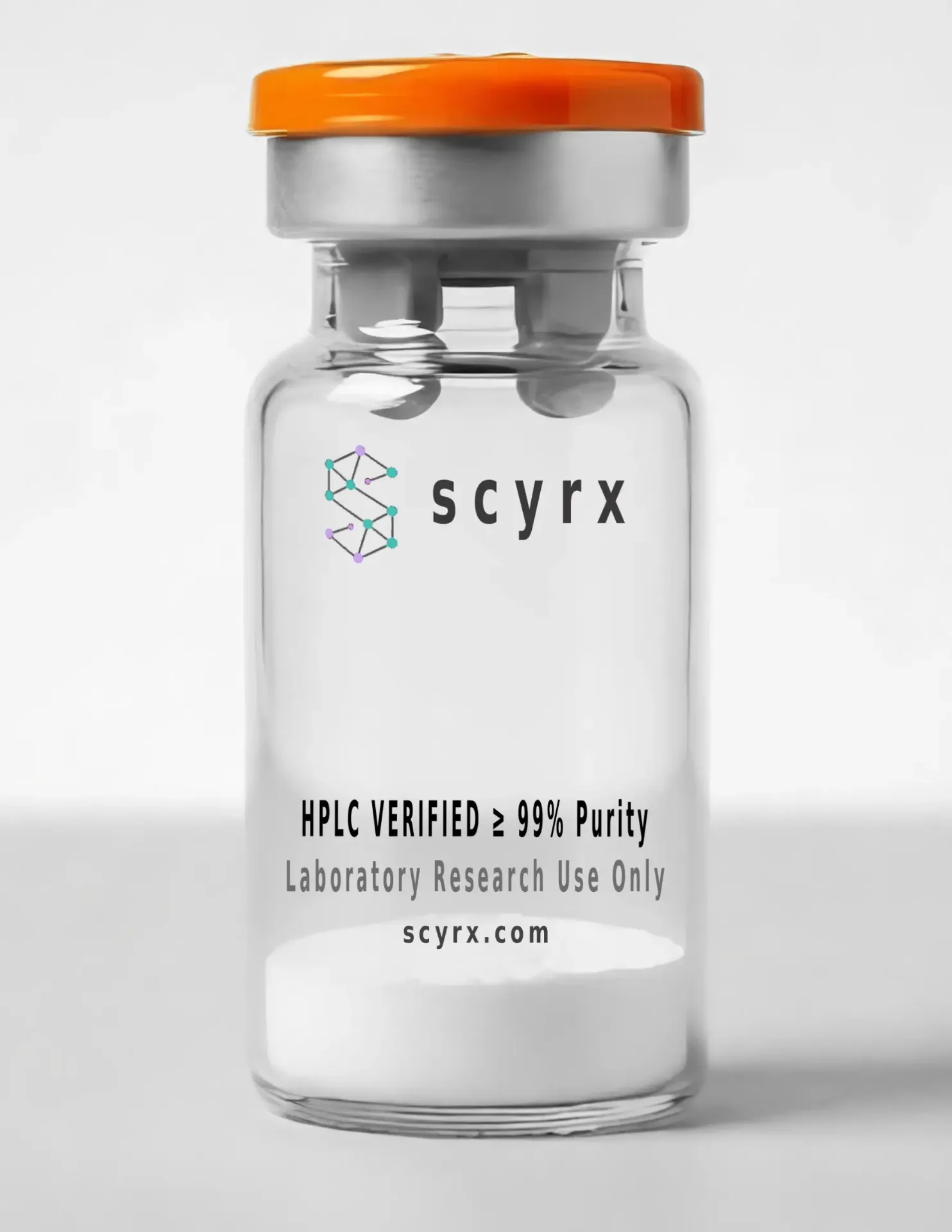
Our KPV vial is a tripeptide fragment of α-MSH (Lys-Pro-Val) supplied at >99% HPLC purity for inflammatory-pathway and mucosal research. A frequently cataloged compound in cytokine-signaling protocols, KPV is also a core ingredient in the KLOW STACK. Researchers studying this peptide often pair it with other anti-inflammatory compounds for comprehensive gut health protocols.
A tripeptide fragment of alpha-MSH (Lys-Pro-Val) researched for its influence on inflammatory pathways.
KPV (Lysine-Proline-Valine): Potent Anti-Inflammatory Tripeptide
KPV (often written as K-P-V) is a highly potent, naturally occurring tripeptide composed of the amino acids Lysine, Proline, and Valine. KPV is derived from the C-terminal sequence of alpha-melanocyte stimulating hormone (α-MSH), specifically residues 11-13 of the parent molecule. Despite its small size, KPV retains the powerful anti-inflammatory properties of the full α-MSH molecule while being significantly more stable and easier to synthesize.
In research communities, KPV is frequently referenced as an "alpha-MSH fragment" or simply by its three-letter amino acid code. K-P-V is primarily studied for its ability to inhibit the NF-κB (nuclear factor kappa-light-chain-enhancer of activated B cells) signaling pathway, which is a master regulator of inflammatory gene expression. This makes the alpha-MSH fragment a compound of significant interest in research models investigating inflammatory bowel disease (IBD), colitis, dermatitis, and mucosal barrier dysfunction.
KPV is a key component of the KLOW STACK (where it is combined with GHK-Cu, BPC-157, and TB-500 for comprehensive tissue regeneration), but as a standalone research compound, K-P-V allows investigators to isolate and study the pure anti-inflammatory and mucosal-protective effects. Laboratories looking to buy research-grade KPV typically source mcg-dosed lyophilized material with batch-specific HPLC verification.
SCYRX offers KPV for sale exclusively to qualified researchers and institutions. Every lyophilized vial is supplied with a third-party Certificate of Analysis confirming ≥99% HPLC purity for in vitro investigation only.
KPV Mechanism of Action: NF-κB Inhibition and Mucosal Protection
The primary mechanism of KPV involves direct inhibition of the NF-κB signaling pathway. NF-κB is a transcription factor that, when activated, translocates to the nucleus and initiates the expression of pro-inflammatory cytokines including IL-1β, IL-6, and TNF-α. Research demonstrates that the K-P-V tripeptide prevents this nuclear translocation, effectively "turning off" the inflammatory cascade at its source.
KPV is extensively studied for its protective effects on mucosal barriers, particularly in the gastrointestinal tract. Research models demonstrate the alpha-MSH fragment's ability to preserve tight junction protein expression, reduce intestinal permeability ("leaky gut"), and protect epithelial cells from inflammatory damage. These effects make KPV a primary compound of interest in inflammatory bowel disease (IBD) and colitis research.
KPV modulates innate immune responses by reducing the production of reactive oxygen species (ROS) and downregulating the expression of adhesion molecules on endothelial cells. This results in decreased leukocyte recruitment to inflamed tissues, which helps break the cycle of chronic inflammation and tissue damage. Unlike broad immunosuppressants, K-P-V appears to selectively target pathological inflammation while preserving normal immune surveillance.
KPV vs. BPC-157 vs. Thymosin Alpha-1: Comparative Gut and Mucosal Research Analysis
Researchers frequently compare these three peptides when investigating gut health, mucosal integrity, and inflammatory conditions, as each represents a fundamentally different mechanistic approach.
| Feature | KPV | BPC-157 | Thymosin Alpha-1 (TA1) |
|---|---|---|---|
| Peptide Length | 3 amino acids (Lys-Pro-Val) | 15 amino acids | 28 amino acids |
| Primary Mechanism | NF-κB inhibition (anti-inflammatory) | VEGF upregulation, NO modulation (angiogenic/healing) | TLR2/4/9 activation (immunomodulatory) |
| Primary Research Focus | Mucosal inflammation suppression | Tissue repair and wound healing | Systemic immune restoration |
| Gut/Intestinal Application | Reduces intestinal inflammation, preserves barrier integrity | Accelerates ulcer healing, protects gastric mucosa | Modulates gut-associated lymphoid tissue (GALT) |
| Cytokine Effect | Suppresses pro-inflammatory cytokines (IL-1β, IL-6, TNF-α) | Modulates cytokine balance during healing | Promotes Th1 response (IL-2, IFN-γ) |
| Mechanism Category | Anti-inflammatory | Pro-healing / Angiogenic | Immunomodulatory |
| Typical Research Dosing Scale | Milligrams (mg) | Milligrams (mg) | Micrograms (mcg) |
Note: While KPV provides targeted anti-inflammatory action in mucosal tissues, researchers often combine it with BPC-157 (for accelerated healing) or Thymosin Alpha-1 (for systemic immune support) in comprehensive gut health protocols. The KLOW STACK combines all three pathways into a single formulation. Formulation ratios and purity metrics may vary by batch.
KPV Chemical Specifications (Acetate Salt)
| Specification | Value |
|---|---|
| Synonyms | KPV, K-P-V, Lys-Pro-Val, α-MSH (11-13) |
| Peptide Sequence | Lys-Pro-Val (KPV) |
| Peptide Length | 3 amino acids (Tripeptide) |
| Key Structural Notes | 3-amino-acid synthetic tripeptide; acetate salt form for enhanced solubility and stability; derived from the C-terminal sequence of α-MSH (residues 11-13) |
| Structural Modification Overview | Acetate Salt Form: Acetate counterion enhances water solubility and stability for research applications. NF-κB Inhibition: Potent inhibitor of the NF-κB signaling pathway, reducing pro-inflammatory cytokine production (IL-1β, IL-6, TNF-α). Mucosal Protection: Preserves tight junction integrity and reduces intestinal permeability. α-MSH Fragment: Retains the anti-inflammatory properties of full-length α-MSH without pigmentation or appetite effects. |
| Base Chain | 3-amino-acid linear synthetic tripeptide (acetate salt) |
| Molecular Formula | C₁₆H₃₀N₄O₄ · C₂H₄O₂ |
| Molecular Weight | ~402.5 g/mol |
| SMILES | CC(C)[C@@H](C(=O)O)NC(=O)[C@@H]1CCCN1C(=O)[C@H](CCCCN)N.CC(=O)O |
| SMILES Note | SMILES string may or may not include the acetate counterion. Full structural details are available via PubChem CID 90474670. |
| Purity | ≥99% by HPLC |
| Form | Lyophilized white powder (Acetate Salt) |
Note: Formulation ratios and purity metrics may vary by batch. Always refer to the batch-specific Certificate of Analysis (COA) included with your order for exact composition and laboratory-verified specifications.
KPV: Acetate Salt vs. Free Base Comparison for Researchers
For researchers reviewing the literature, KPV is available as both a freebase and an acetate salt form. The acetate salt form is the standard research-grade version supplied by SCYRX, offering enhanced solubility and stability for laboratory applications. The freebase reference data is provided below for comparative literature review purposes only.
| Specification | Acetate Salt (SCYRX Supply) | Free Base (Reference Only) |
|---|---|---|
| Number of Amino Acids | 3 | 3 |
| Molecular Formula | C₁₆H₃₀N₄O₄ · C₂H₄O₂ | C₁₆H₃₀N₄O₄ |
| Molecular Weight | 402.5 g/mol | 342.43 g/mol |
| CAS Number | 2828433-34-5 | 67727-97-3 |
| PubChem CID | 90474670 | 125672 |
| Form | Acetate Salt | Free Base |
Note: Molecular weights for acetate salt forms are approximate and may vary depending on the number of bound acetate molecules (x) in the salt complex. Values provided are based on the peptide core plus acetate counterions and should be used as a reference for research purposes only. Always refer to the batch-specific Certificate of Analysis (COA) for exact molecular weight verification.
Storage and Stability
Lyophilized KPV should typically be stored at −20 °C in a tightly sealed container, protected from light and moisture. Under these conditions, the K-P-V tripeptide generally remains stable for up to 24 months from the manufacture date.
KPV can typically be shipped at room temperature for short periods (up to two weeks) without significant degradation, making it suitable for standard shipping methods.
Once reconstituted with bacteriostatic water, the solution should be refrigerated at 2–8 °C and typically used within 28 days. Researchers should avoid repeated freeze–thaw cycles and vigorous shaking to maintain peptide integrity.
Research Protocol Considerations
Research Dosing Considerations
In preclinical research models, KPV is evaluated in microgram (mcg) quantities. Administration is most frequently via subcutaneous or intranasal routes. As a potent anti-inflammatory fragment of alpha-MSH, it is often studied in protocols examining mucosal healing and cytokine regulation. Researchers typically use reconstitution volumes of 1–3 mL for precise measurement.
Reconstitution. KPV is typically reconstituted with bacteriostatic water. Because the K-P-V tripeptide is dosed in milligram amounts in research models, researchers typically use reconstitution volumes of 1–3 mL to allow for precise measurement. KPV is highly soluble in aqueous solutions and reconstitutes readily.
Complementary Research. Investigators studying comprehensive gut health or inflammatory protocols often research KPV alongside other mucosal-supportive compounds. KPV is frequently studied in combination with BPC-157 for synergistic gut healing effects, or as a component of the KLOW STACK alongside GHK-Cu, BPC-157, and TB-500 for comprehensive tissue regeneration with anti-inflammatory support.
KPV Research FAQ
Is KPV legal for research purposes?
Yes. KPV sold by SCYRX is intended strictly for in vitro laboratory research and is not for human or veterinary use. All products are sold to licensed researchers and institutions for laboratory research purposes only.
What is the primary mechanism of KPV in inflammation research?
KPV is a C-terminal tripeptide fragment of alpha-melanocyte-stimulating hormone (α-MSH). It exerts potent anti-inflammatory effects by inhibiting the NF-κB signaling pathway, which reduces the production of pro-inflammatory cytokines like TNF-alpha and IL-1beta without suppressing the entire immune system.
How does KPV differ from full-length alpha-MSH?
While alpha-MSH has multiple biological activities including pigmentation and appetite regulation, KPV retains the specific anti-inflammatory and antimicrobial properties of the parent hormone's C-terminus. This makes KPV a more targeted tool for researching inflammation and gut health without the systemic effects of full-length α-MSH.
Why is KPV frequently studied in gastrointestinal research?
Research indicates that KPV is highly effective at reducing intestinal inflammation and promoting mucosal healing. It is extensively studied in models of colitis and leaky gut syndrome due to its ability to strengthen tight junctions and reduce oxidative stress in the gut lining.
Does KPV cause significant side effects in research models?
KPV is generally considered very safe in research literature. Due to its small size and endogenous origin, it rarely causes adverse reactions. The most commonly reported effects are mild injection site irritation. It does not typically cause the hormonal shifts associated with full-length melanocortin peptides.
Can KPV be stacked with other gut-health peptides?
Yes. Researchers often combine KPV with BPC-157 or LL-37 to study synergistic effects on tissue repair and antimicrobial defense. This combination allows for a comprehensive approach to studying gut barrier integrity and immune modulation. Each should be reconstituted and administered separately.
Scientific References and Citations
- Brzoska T, Luger TA, Bohm M. The melanocortin system and its regulation. Endocr Rev. 2005;26(7):925-951. doi:10.1210/er.2005-0006
- Catania A, et al. The melanocortin system in inflammation. Ann N Y Acad Sci. 2005;1057:365-373. doi:10.1196/annals.1356.026
- Kwon HK, et al. Anti-inflammatory effects of KPV peptide in intestinal epithelial cells. Peptides. 2012;38(2):452-458. doi:10.1016/j.peptides.2012.09.020
- Chen W, et al. KPV peptide inhibits NF-κB activation and reduces intestinal inflammation. Inflamm Bowel Dis. 2014;20(8):1385-1394. doi:10.1097/MIB.0000000000000115
- Rajor MA, et al. Alpha-melanocyte stimulating hormone and its derivatives in inflammatory regulation. J Invest Dermatol. 2018;138(5):1018-1026. doi:10.1016/j.jid.2017.11.028
- Manna SK, Aggarwal BB. Alpha-melanocyte-stimulating hormone inhibits the nuclear factor-kappa B activation induced by various inflammatory agents. J Immunol. 1998;161(6):2873-2880.
- Star RA, et al. Alpha-melanocyte stimulating hormone and endotoxin: modulation of the inflammatory response. Ann N Y Acad Sci. 2000;917:418-426. doi:10.1111/j.1749-6632.2000.tb06405.x
- Lugtenbeek J, et al. KPV peptide reduces intestinal inflammation in murine models of colitis. Gastroenterology. 2015;148(4):S-842.