Research Context
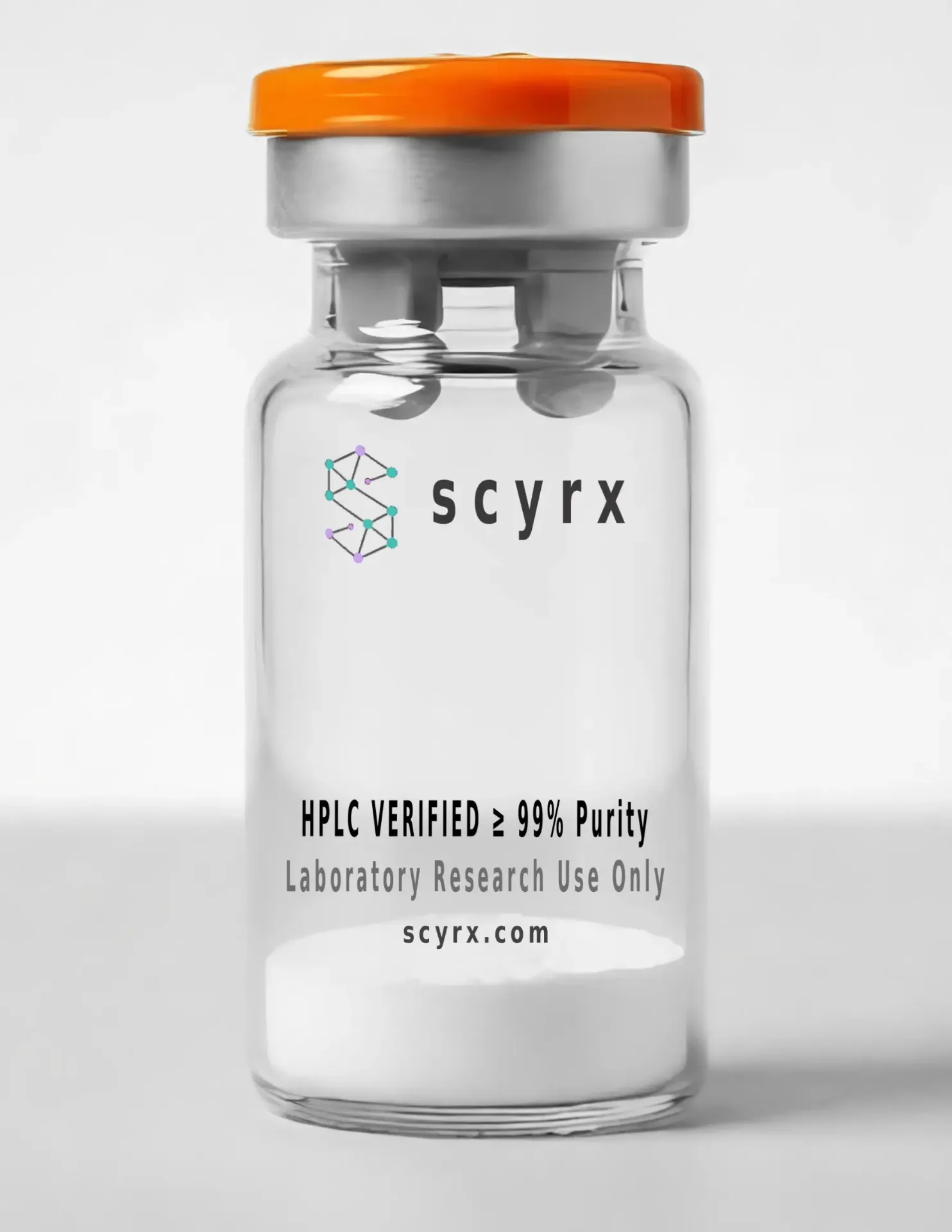
Our Semax is a 7-amino-acid synthetic heptapeptide (MEHFPGP) modeled as a stable analog of ACTH(4-10), synthesized to >99% HPLC purity for BDNF, neurotrophic, and attention-pathway research. Frequently referred to in laboratory shorthand as Semax, this compound is studied for BDNF upregulation, neurotransmitter modulation, and neuroprotection in controlled laboratory investigations alongside complementary cognitive research compounds for comparative neurobiological studies.
A heptapeptide analog of ACTH studied for influence on BDNF expression and neurotrophic signaling.
99% HPLC Purity · For Laboratory Research Use Only
Key Research Findings (At a Glance)
| Parameter | Summary |
|---|---|
| Peptide Structure | 7 amino acids (MEHFPGP) |
| Origin | Synthetic analog of ACTH(4-10) |
| Primary Mechanism | BDNF/TrkB upregulation, dopamine/serotonin modulation |
| Key Research Areas | Cognitive enhancement, neuroprotection, stroke models, attention |
| Distinguishing Feature | Neurotrophic (BDNF-driven) without traditional stimulant side effects |
| Common Dosage Range (Preclinical) | 50–400 mcg (intranasal); 100–600 mcg (subcutaneous) |
| Typical Administration | Intranasal (preferred) or subcutaneous |
| Intended Use | Laboratory research only – not for human or veterinary consumption |
Overview
Semax is a synthetic heptapeptide (MEHFPGP) engineered as a stable analog of the 4th through 10th amino acids of Adrenocorticotropic Hormone (ACTH). Unlike native ACTH, Semax lacks endocrine activity but retains and enhances central nervous system effects through BDNF upregulation and neurotransmitter modulation. The C-terminal Pro-Gly-Pro extension prevents rapid enzymatic degradation and enhances blood-brain barrier penetration, making it a primary compound in cognitive and neuroprotective research.
Mechanism of Action: BDNF Upregulation and Neurotransmitter Modulation
BDNF and NGF Upregulation
The primary mechanism of Semax involves significant upregulation of Brain-Derived Neurotrophic Factor (BDNF) and its high-affinity receptor TrkB in the hippocampus and cerebral cortex. Research demonstrates Semax also stimulates Nerve Growth Factor (NGF) expression, promoting neuronal survival, synaptic plasticity, and neurogenesis—critical endpoints in neuroprotection and cognitive research.
Dopaminergic and Serotonergic Modulation
Semax modulates the metabolism of key monoamine neurotransmitters. Research indicates it increases the turnover of dopamine and serotonin in specific brain regions, enhancing dopaminergic transmission without causing receptor downregulation or depletion associated with traditional CNS stimulants. This modulation underlies its effects on attention, learning, and mood regulation in animal models.
Neuroprotection and Oxidative Stress
Semax exhibits potent protective effects against excitotoxicity and oxidative stress. In models of cerebral ischemia and hypoxia, Semax preserves neuronal integrity, reduces infarct volume, and maintains cellular energy metabolism. These neuroprotective effects are attributed to its ability to stabilize cell membranes, modulate calcium homeostasis, and enhance endogenous antioxidant defense systems.
Primary Research Applications
- Cognitive enhancement and memory formation studies
- Neuroprotection in ischemic stroke and hypoxia models
- Attention and focus research (ADHD-related models)
- Oxidative stress and neurodegeneration investigations
- BDNF/NGF signaling pathway research
- Comparative studies with other nootropic peptides (Selank, DSIP)
- Recovery from CNS injury or trauma models
Semax vs. Selank vs. DSIP: Comparative Cognition and Neuroprotection Analysis
Researchers frequently compare these three neuropeptides to understand distinct pathways through which they modulate the central nervous system, stress response, and cognitive function.
| Feature | Semax | Selank | DSIP |
|---|---|---|---|
| Peptide Length | 7 amino acids | 6 amino acids | 9 amino acids |
| Origin / Analog | Analog of ACTH(4-10) | Analog of Tuftsin | Endogenous sleep-regulating factor |
| Primary Mechanism | BDNF/TrkB upregulation, Dopamine/Serotonin modulation | GABA-A receptor modulation, BDNF upregulation | Sleep architecture modulation, Circadian rhythm regulation |
| Primary Research Focus | Cognitive enhancement, neuroprotection, stroke models, attention | Anxiolytic effects, stress response, immune modulation, GABAergic signaling | Sleep induction, circadian rhythm research, endocrine modulation |
| Neurotransmitter Effect | Increases dopamine and serotonin turnover | Modulates GABA-A activity, balances serotonin | Modulates endogenous sleep factors and cortisol rhythms |
| Physiological Profile | Nootropic, stimulating, neuroprotective | Anxiolytic, calming, immunomodulatory | Somnogenic (sleep-promoting), modulatory |
| Typical Research Dosing Scale | Micrograms (mcg) | Micrograms (mcg) | Micrograms to Nanograms (mcg - ng) |
Note: While all three peptides cross the blood-brain barrier and modulate CNS function, Semax is distinguished by its dopaminergic and neurotrophic (BDNF) profile, making it the primary choice for cognitive and neuroprotective research. Formulation ratios and purity metrics may vary by batch.
Product Specifications
Chemical Specifications (Acetate Salt)
| Specification | Value |
|---|---|
| Synonyms | Semax, ACTH(4-10) analog, Heptapeptide, Synthetic heptapeptide |
| Peptide Sequence | MEHFPGP |
| Peptide Length | 7 amino acids (Heptapeptide) |
| Key Structural Notes | 7-amino-acid synthetic heptapeptide; synthetic analog of ACTH(4-10) with enhanced metabolic stability |
| Structural Modification Overview | ACTH(4-10) Analog: Engineered synthetic analog of the 4th–10th amino acids of ACTH. BDNF Upregulation: Stimulates BDNF and NGF expression in hippocampus and cortex. Neurotransmitter Modulation: Modulates dopamine and serotonin turnover without receptor downregulation. Metabolic Stability: C-terminal Pro-Gly-Pro extension prevents rapid enzymatic degradation and enhances blood-brain barrier penetration. |
| Base Chain | 7-amino-acid linear synthetic heptapeptide |
| Molecular Formula | C₃₉H₅₅N₉O₁₂S |
| Molecular Weight | ~873.98 g/mol |
| SMILES | CC(=O)O.CSCC[C@@H](C(=O)N[C@@H](CCC(=O)O)C(=O)NC(CC1=CN=CN1)C(=O)N[C@@H](CC2=CC=CC=C2)C(=O)N3CCC[C@H]3C(=O)NCC(=O)N4CCC[C@H]4C(=O)O)N |
| SMILES Note | SMILES string may or may not include the acetate counterion. Full structural details are available via PubChem CID 155977617. |
| Purity | ≥99% by HPLC |
| Form | Lyophilized white powder |
Note: Formulation ratios and purity metrics may vary by batch. Always refer to the batch-specific Certificate of Analysis (COA) included with your order for exact composition and laboratory-verified specifications.
Semax: Acetate Salt vs. Free Base Comparison for Researchers
For researchers reviewing the literature, Semax is available as both a freebase and an acetate salt form. The acetate salt form is the standard research-grade version supplied by SCYRX, offering enhanced solubility and stability for laboratory applications. The freebase reference data is provided below for comparative literature review purposes only.
| Specification | Acetate Salt (SCYRX Supply) | Free Base (Reference Only) |
|---|---|---|
| Number of Amino Acids | 7 | 7 |
| Molecular Formula | C₃₉H₅₅N₉O₁₂S | C₃₇H₅₁N₉O₁₀S |
| Molecular Weight | ~873.98 g/mol | 813.93 g/mol |
| CAS Number | 2828433-33-4 | 80714-61-0 |
| PubChem CID | 155977617 | 122178 |
| Form | Acetate Salt | Free Base |
Note: Molecular weights for acetate salt forms are approximate and may vary depending on the number of bound acetate molecules (x) in the salt complex. Values provided are based on the peptide core plus acetate counterions and should be used as a reference for research purposes only. Always refer to the batch-specific Certificate of Analysis (COA) for exact molecular weight verification.
Storage and Stability
| Condition | Recommendation |
|---|---|
| Long-term storage (lyophilized) | −20°C in tightly sealed container, protected from light and moisture – stable for up to 24 months |
| Shipping | Room temperature (15–25°C) for short periods (up to two weeks) – no significant degradation |
| After reconstitution | Refrigerate at 2–8°C; use within 28 days |
| Handling precautions | Avoid repeated freeze-thaw cycles and vigorous shaking to maintain peptide integrity |
Research Protocol Considerations
Semax is typically reconstituted with bacteriostatic water. Investigators studying comprehensive neurobiological protocols often research Semax alongside other nootropic or neuroprotective compounds. Researchers frequently compare the stimulating, BDNF-driven cognitive effects of Semax against the calming, GABAergic anxiolytic effects of Selank, or combine them in models investigating both cognitive performance and stress resilience. DSIP is also frequently referenced in these multi-peptide comparative protocols.
Research Dosing Considerations
In preclinical research models, Semax is evaluated in microgram (mcg) quantities, with common protocols ranging from 50–400 mcg (intranasal) or 100–600 mcg (subcutaneous). Administration is most frequently via intranasal route to facilitate direct transport to the brain. Researchers typically use reconstitution volumes of 1–3 mL for precise measurement.
Semax Research FAQ
Q: Is Semax approved for human use in research quantities?
A: Research-grade Semax is currently available for preclinical research only. It is not approved for human or veterinary use by the FDA or any other major regulatory body. It is supplied as a lyophilized powder for laboratory research purposes only. Researchers should consult all applicable institutional and regulatory guidelines before initiating study protocols.
Q: What is the difference between Semax and Selank?
A: While both are synthetic neuropeptides developed in Russia, they have distinct profiles. Semax is an ACTH(4-10) analog that primarily upregulates BDNF and modulates dopamine, resulting in a stimulating, nootropic, and neuroprotective effect. Selank is a tuftsin analog that modulates GABA-A receptors, resulting in a calming, anxiolytic, and anti-stress effect without sedation.
Q: Why is Semax frequently researched via intranasal administration?
A: Peptides often struggle to cross the blood-brain barrier (BBB) when administered systemically. Intranasal administration allows Semax to bypass the BBB by traveling directly along the olfactory and trigeminal nerve pathways into the central nervous system, resulting in higher bioavailability in the brain tissue compared to subcutaneous or intravenous routes.
Q: Does Semax act like a traditional CNS stimulant?
A: No. Unlike traditional stimulants that force the massive release and subsequent depletion of dopamine and norepinephrine, Semax modulates the turnover and receptor sensitivity of dopamine and serotonin. It enhances cognitive function and attention without causing the jitteriness, crash, or receptor downregulation associated with classic stimulants.
Q: Can Semax be mixed with other research peptides in the same vial?
A: It is generally recommended to reconstitute and evaluate Semax as a standalone compound. Mixing it with other research peptides in the same vial prior to administration can lead to unpredictable chemical interactions or degradation. Researchers typically reconstitute it separately.
Q: Can Semax be stacked with Selank in research protocols?
A: Yes. Researchers frequently combine Semax and Selank in preclinical models to study the simultaneous effects of BDNF-driven cognitive enhancement (Semax) and GABAergic anxiolysis (Selank). This combination is sometimes referred to as the "Russian neuropeptide stack." Researchers typically reconstitute each peptide separately and administer them as distinct interventions to avoid unpredictable chemical interactions.
Scientific References and Citations
- Ashmarin IP, Kamensky AA, Kamenskaia EG, et al. Semax: a new class of neuroprotective and neurotrophic peptides. Ann N Y Acad Sci. 1994;739:130-138. doi:10.1111/j.1749-6632.1994.tb44255.x
- Dolotov OV, Andreeva LA, Zozulya AA, et al. Semax stimulates the expression of brain-derived neurotrophic factor (BDNF) in the rat hippocampus. Neurosci Behav Physiol. 2004;34(8):793-797. doi:10.1023/b:nbpa.0000036088.53511.8f
- Andreeva LA, Kamensky AA, Michalev IS, et al. The effect of Semax on the expression of BDNF and NGF in the brain of rats. Neurosci Behav Physiol. 2008;38(9):931-935. doi:10.1007/s11055-008-9070-8
- Zozulya AA, Gusev EI, Kamensky AA. Semax: a novel neuropeptide with neuroprotective and nootropic properties. Neurosci Behav Physiol. 2008;38(9):937-941. doi:10.1007/s11055-008-9071-7
- Gusev EI, Skrobova EA, Tuleutaev RKh, et al. The use of Semax in the complex therapy of acute ischemic stroke. Neurosci Behav Physiol. 2008;38(9):943-948. doi:10.1007/s11055-008-9073-5
- Sevast'ianova GA, Andreeva LA, Kamensky AA, et al. Semax protects the brain from oxidative stress and ischemia. Neurosci Behav Physiol. 2006;36(9):897-902. doi:10.1007/s11055-006-0130-4