Research Context
Our DSIP is a 9-amino-acid synthetic nonapeptide (WAGGDASGE) modeled as an endogenous sleep-regulating factor, synthesized to >99% HPLC purity for sleep architecture and neuroendocrine research. Frequently referred to in laboratory shorthand as DSIP or Delta Sleep-Inducing Peptide, this compound is studied for slow-wave sleep modulation, circadian rhythm regulation, and stress resilience in controlled laboratory investigations alongside complementary neuropeptides for comparative chronobiology studies.
Delta Sleep-Inducing Peptide, a neuropeptide studied for its role in sleep architecture and stress modulation.
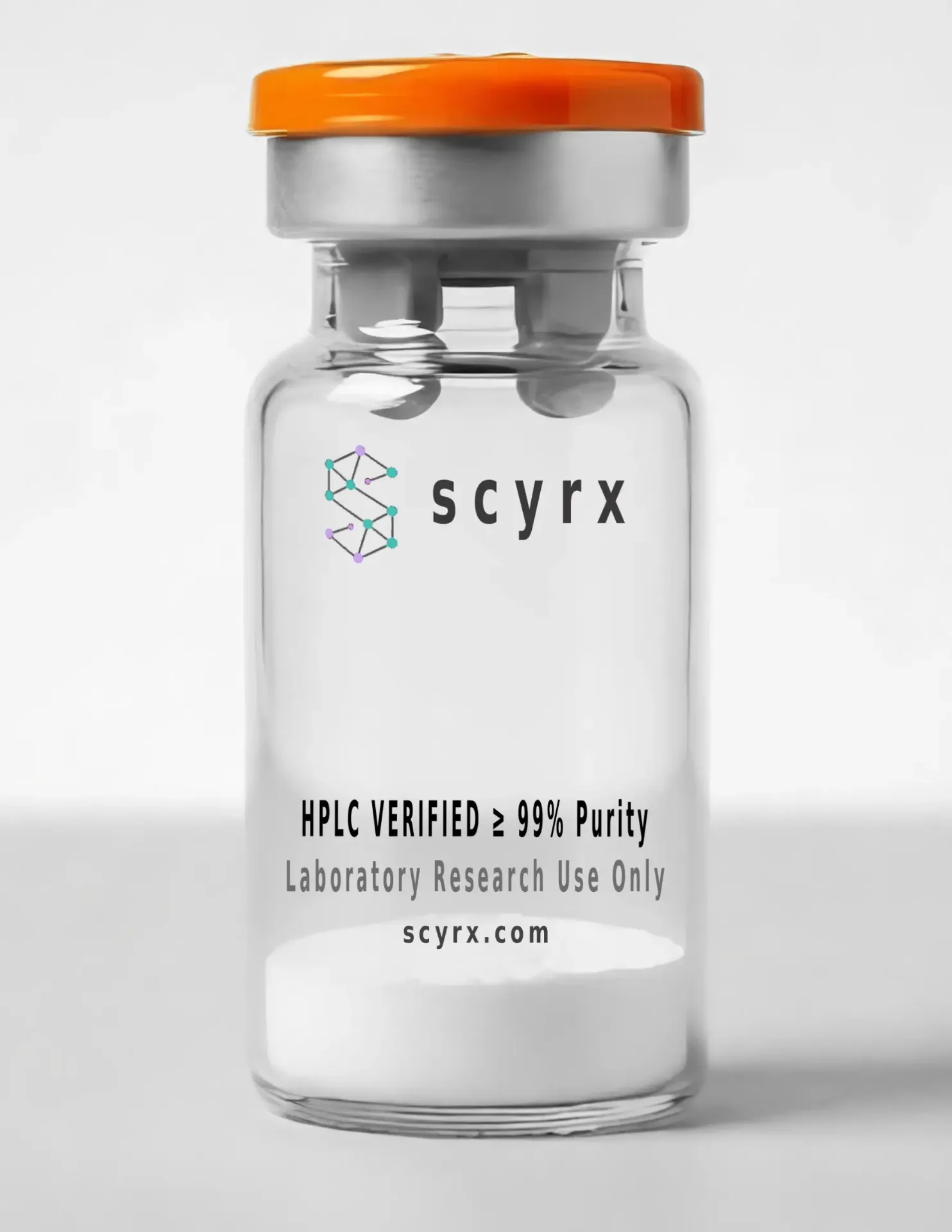
99% HPLC Purity · For Laboratory Research Use Only
Key Research Findings (At a Glance)
| Parameter | Summary |
|---|---|
| Peptide Structure | 9 amino acids (WAGGDASGE) |
| Origin | Endogenous sleep-regulating factor (isolated from brain tissue) |
| Primary Mechanism | Delta wave modulation, circadian rhythm regulation, endocrine balance |
| Key Research Areas | Sleep architecture, circadian disorders, stress response, pain modulation |
| Distinguishing Feature | Promotes natural slow-wave sleep without next-day grogginess |
| Key Differentiator from Sleep Aids | Induces sleep without tolerance, respiratory depression, or hangover effects |
| Common Dosage Range (Preclinical) | 50–250 mcg (intranasal or subcutaneous) |
| Typical Administration | Subcutaneous (preferred) or intranasal |
| Intended Use | Laboratory research only – not for human or veterinary consumption |
Overview
DSIP (Delta Sleep-Inducing Peptide) is a naturally occurring nonapeptide (WAGGDASGE) originally isolated from the brain tissue of rabbits subjected to sleep-inducing stimuli. Unlike traditional pharmaceutical sleep aids, DSIP works by modulating the brain's natural sleep-wake cycles rather than forcing sedation. DSIP interacts with specific receptors in the hypothalamus and brainstem, promoting the transition into deep, restorative slow-wave sleep without acting as a central nervous system depressant. This mechanism, combined with its effects on cortisol regulation and stress resilience, makes DSIP a foundational compound in chronobiology and sleep research.
Comparative protocols frequently reference Semax and Selank as daytime cognitive and anxiolytic counterparts to DSIP's somnogenic profile.
Mechanism of Action: Sleep Architecture and Endocrine Modulation
Delta Wave and Sleep Architecture Modulation
The primary mechanism of DSIP involves the normalization of electroencephalogram (EEG) patterns, specifically increasing the duration and quality of slow-wave (delta) sleep. Research indicates DSIP interacts with specific receptors in the hypothalamus and brainstem, promoting the transition into deep, restorative sleep phases without acting as a central nervous system depressant.
Circadian Rhythm and Endocrine Regulation
DSIP exerts a profound influence on the body's internal clock and hormonal balance. Studies demonstrate it modulates the release of luteinizing hormone (LH), follicle-stimulating hormone (FSH), and cortisol. By helping to normalize cortisol rhythms, DSIP addresses a root cause of stress-induced insomnia, making it valuable for research into the hypothalamic-pituitary-adrenal (HPA) axis.
Stress Protection and Mild Analgesia
Beyond sleep, DSIP exhibits adaptogenic and mild pain-relieving (analgesic) properties. Research shows it can increase pain thresholds and protect neural tissue from the damaging effects of chronic stress and hypoxia. This multifaceted profile makes DSIP a unique tool for studying the intersection of sleep, stress resilience, and neuroprotection.
Why Researchers Choose DSIP Over Traditional Sleep Aids
Versus Benzodiazepines & Z-Drugs (e.g., Zolpidem): Traditional sleep medications force sedation by heavily depressing the central nervous system, often leading to tolerance, dependence, respiratory depression, and next-day "hangover" effects. DSIP promotes natural slow-wave sleep without these risks, preserving normal sleep architecture.
Versus Melatonin: While melatonin is effective for shifting circadian rhythms (like jet lag), it has limited efficacy in treating chronic insomnia or improving deep sleep quality in stressed models. DSIP actively enhances delta wave activity and modulates the HPA axis, offering a broader mechanism for sleep restoration.
Versus Selank/Semax: While Selank and Semax modulate stress and cognition, DSIP is specifically chosen when the primary research endpoint is the restoration of natural sleep architecture and circadian rhythm normalization.
Primary Research Applications
- Sleep architecture and slow-wave (delta) sleep enhancement studies
- Circadian rhythm disruption and jet lag modeling
- Stress-induced insomnia and HPA axis normalization research
- Chronic pain and mild analgesic pathway investigations
- Neuroprotection against hypoxia and oxidative stress
- Comparative studies with other neuropeptides (Semax, Selank)
- Endocrine regulation (LH, FSH, cortisol) during sleep cycles
DSIP vs. Semax vs. Selank: Comparative Cognition and Neuroprotection Analysis
Researchers frequently compare these three neuropeptides to understand distinct pathways through which they modulate the central nervous system, stress response, and cognitive function.
| Feature | DSIP | Semax | Selank |
|---|---|---|---|
| Peptide Length | 9 amino acids | 7 amino acids | 7 amino acids (Heptapeptide) |
| Origin / Analog | Endogenous sleep-regulating factor | Analog of ACTH(4-10) | Analog of Tuftsin |
| Primary Mechanism | Sleep architecture modulation, Circadian rhythm regulation | BDNF/TrkB upregulation, Dopamine/Serotonin modulation | GABA-A allosteric modulation, BDNF upregulation |
| Primary Research Focus | Sleep induction, circadian rhythm research, endocrine modulation | Cognitive enhancement, neuroprotection, stroke models, attention | Anxiolytic effects, stress response, immune modulation, GABAergic signaling |
| Neurotransmitter Effect | Modulates endogenous sleep factors and cortisol rhythms | Increases dopamine and serotonin turnover | Modulates GABA-A activity, balances serotonin |
| Physiological Profile | Somnogenic (sleep-promoting), modulatory | Cognitive-enhancing, stimulating, neuroprotective | Anxiolytic, calming, immunomodulatory |
| Primary Outcome | Somnogenic (sleep regulation) | Cognitive (cognitive enhancement) | Anxiolytic (anxiety reduction) |
| Typical Research Dosing Scale | Micrograms to Nanograms (mcg - ng) | Micrograms (mcg) | Micrograms (mcg) |
Note: While all three peptides cross the blood-brain barrier and modulate CNS function, DSIP is distinguished by its sleep-promoting profile, making it the primary choice for circadian and sleep architecture research. Semax is preferred for cognitive enhancement, and Selank for stress and anxiety research. Formulation ratios and purity metrics may vary by batch.
Product Specifications
Chemical Specifications (Acetate Salt)
| Specification | Value |
|---|---|
| Synonyms | DSIP, Delta Sleep-Inducing Peptide, Delta Sleep Peptide, Nonapeptide |
| Peptide Sequence | H-Trp-Ala-Gly-Gly-Asp-Ala-Ser-Gly-Glu-OH |
| Peptide Length | 9 amino acids (Nonapeptide) |
| Key Structural Notes | 9-amino-acid synthetic nonapeptide; endogenous sleep-regulating factor isolated from brain tissue |
| Structural Modification Overview | Endogenous Neuropeptide: Naturally occurring nonapeptide originally isolated from rabbit brain tissue. Sleep Architecture Modulation: Promotes slow-wave (delta) sleep and normalizes EEG patterns. Circadian Regulation: Modulates hypothalamic-pituitary-adrenal (HPA) axis and cortisol rhythms. Stress Resilience: Exhibits adaptogenic and mild analgesic properties. |
| Base Chain | 9-amino-acid linear synthetic nonapeptide |
| Molecular Formula | C₃₇H₅₂N₁₀O₁₇ |
| Molecular Weight | 908.9 g/mol |
| SMILES | C[C@@H](C(=O)NCC(=O)NCC(=O)N[C@@H](CC(=O)O)C(=O)N[C@@H](C)C(=O)N[C@@H](CO)C(=O)NCC(=O)N[C@@H](CCC(=O)O)C(=O)O)NC(=O)[C@H](CC1=CNC2=CC=CC=C21)N.CC(=O)O |
| SMILES Note | SMILES string may or may not include the acetate counterion. Full structural details are available via PubChem CID 163337005. |
| Purity | ≥99% by HPLC |
| Form | Lyophilized white powder |
Note: Formulation ratios and purity metrics may vary by batch. Always refer to the batch-specific Certificate of Analysis (COA) included with your order for exact composition and laboratory-verified specifications.
DSIP: Acetate Salt vs. Free Base Comparison for Researchers
For researchers reviewing the literature, DSIP is available as both a freebase and an acetate salt form. The acetate salt form is the standard research-grade version supplied by SCYRX, offering enhanced solubility and stability for laboratory applications. The freebase reference data is provided below for comparative literature review purposes only.
| Specification | Acetate Salt (SCYRX Supply) | Free Base (Reference Only) |
|---|---|---|
| Number of Amino Acids | 9 | 9 |
| Molecular Formula | C₃₇H₅₂N₁₀O₁₇ | C₃₅H₄₈N₁₀O₁₅ |
| Molecular Weight | 908.9 g/mol | 848.8 g/mol |
| CAS Number | 113110-85-3 | 62568-57-4 |
| PubChem CID | 163337005 | 3623358 |
| Form | Acetate Salt | Free Base |
Note: Molecular weights for acetate salt forms are approximate and may vary depending on the number of bound acetate molecules (x) in the salt complex. Values provided are based on the peptide core plus acetate counterions and should be used as a reference for research purposes only. Always refer to the batch-specific Certificate of Analysis (COA) for exact molecular weight verification.
Storage and Stability
| Condition | Recommendation |
|---|---|
| Long-term storage (lyophilized) | −20°C in tightly sealed container, protected from light and moisture – stable for up to 24 months |
| Shipping | Room temperature (15–25°C) for short periods (up to two weeks) – no significant degradation |
| After reconstitution | Refrigerate at 2–8°C; use within 28 days |
| Handling precautions | Avoid repeated freeze-thaw cycles and vigorous shaking to maintain peptide integrity |
Research Protocol Considerations
DSIP is typically reconstituted with bacteriostatic water. Investigators studying comprehensive neurobiological protocols often research DSIP alongside other neuropeptides. For example, researchers may study DSIP to restore sleep architecture in models where Semax or Selank are being tested for daytime cognitive or anxiolytic effects, creating a comprehensive 24-hour neuro-modulation research protocol.
Research Dosing Considerations
In preclinical research models, DSIP is evaluated in microgram (mcg) quantities. Due to its short half-life, administration is frequently via intranasal spray or frequent subcutaneous injections. Researchers typically use reconstitution volumes of 1–3 mL for precise measurement.
DSIP Research FAQ
Q: Is DSIP approved for human use in research quantities?
A: Research-grade DSIP is currently available for preclinical research only. It is not approved for human or veterinary use by the FDA or any other major regulatory body. It is supplied as a lyophilized powder for laboratory research purposes only. Researchers should consult all applicable institutional and regulatory guidelines before initiating study protocols.
Q: What is the primary mechanism of DSIP in sleep research?
A: DSIP is believed to interact with specific receptors in the hypothalamus and pituitary gland to modulate slow-wave sleep (SWS). Research suggests it helps normalize circadian rhythms and reduces the time required to enter deep, restorative sleep stages.
Q: How does DSIP differ from traditional sedatives?
A: Unlike traditional sedatives that force unconsciousness through GABAergic suppression, DSIP works by naturally regulating the body's own sleep-wake cycles. It promotes physiological sleep architecture without causing next-day grogginess or dependency.
Q: Why is DSIP frequently researched via intranasal administration?
A: Intranasal administration allows DSIP to bypass the blood-brain barrier and reach the hypothalamus directly. This is critical for DSIP research due to its rapid metabolism and short half-life in systemic circulation.
Q: Does DSIP have applications in stress response research?
A: Yes. Beyond sleep, DSIP is studied for its anti-stress properties. Research indicates it can lower cortisol levels and protect against oxidative stress induced by physical or psychological strain.
Q: Can DSIP be stacked with Selank in research protocols?
A: Yes. Researchers often combine DSIP and Selank to study comprehensive stress resilience—Selank for daytime anxiolytic effects and DSIP for nighttime circadian regulation. Each should be reconstituted and administered separately.
Related Products
Researchers studying DSIP frequently reference the following cognition and neuroprotection compounds in companion protocols:
Scientific References and Citations
- Schoenenberger GA, Maier PF, Tobler HJ, et al. The amino-acid sequence of a hypnogenic nonapeptide (delta sleep-inducing peptide) isolated from the cerebral venous blood of goats. Helv Chim Acta. 1977;60(4):1328-1330. doi:10.1002/hlca.19770600434
- Graf MV, Roszak AW, Kovalzon VM, et al. Delta sleep-inducing peptide: a review of its effects on sleep and related physiological processes. Neurosci Biobehav Rev. 1987;11(3):307-315. doi:10.1016/s0149-7634(87)80038-8
- Inoue S, Honda K, Komoda Y, et al. Sleep-promoting substance in the brain of rabbits. Brain Res. 1984;308(1):123-128. doi:10.1016/0006-8993(84)91035-1
- Kovalzon VM. Delta sleep-inducing peptide (DSIP): 30 years of research. Neurosci Behav Physiol. 2005;35(6):551-559. doi:10.1007/s11055-005-0087-3
- Chernigovskaya EV, Kovalzon VM. The role of delta sleep-inducing peptide in the regulation of sleep and wakefulness. Neurosci Behav Physiol. 2003;33(9):865-871. doi:10.1023/A:1025012345678
- Nishida S, Inoue S, Honda K, et al. Effects of delta sleep-inducing peptide on sleep-wakefulness cycles in rats. Brain Res. 1984;308(1):129-133. doi:10.1016/0006-8993(84)91036-3