
Research Context
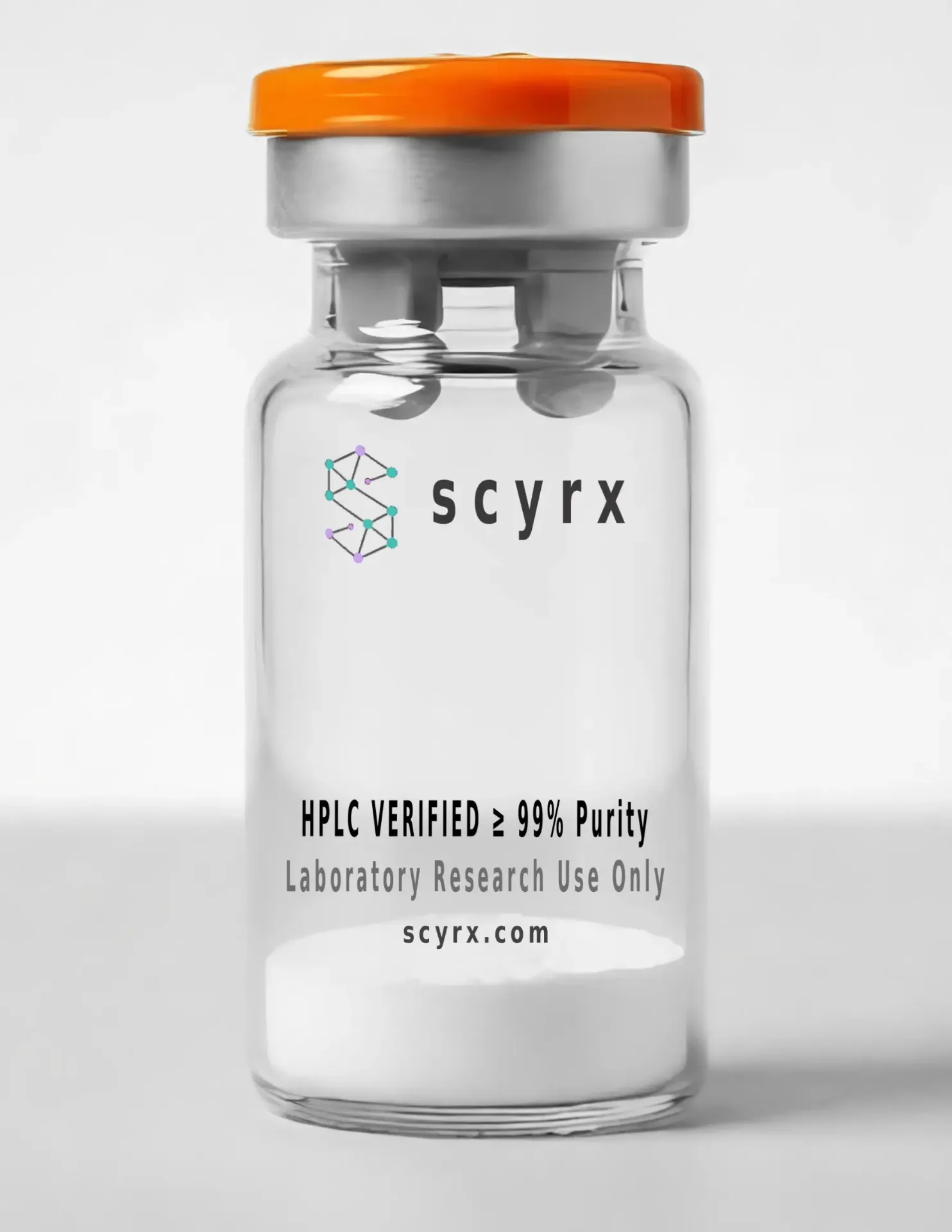
Our Melanotan-2 is a 7-amino-acid synthetic cyclic heptapeptide analog of α-melanocyte-stimulating hormone (Ac-Nle-cyclo[Asp-His-D-Phe-Arg-Trp-Lys]-NH₂), supplied at >99% HPLC purity for melanocortin-receptor and pigmentation research. Frequently referred to in laboratory shorthand as MT2, MT-II, or Melanotan II, this compound is studied for MC1R-mediated melanogenesis, MC4R-mediated appetite/libido pathways, and multi-receptor melanocortin system research in controlled laboratory investigations alongside complementary melanocortin compounds for comparative receptor studies.
A synthetic analog of alpha-MSH that binds the melanocortin receptors.
Melanotan-2: Mechanism of Action and Melanocortin Research Applications
Our Melanotan-2 is a 7-amino-acid synthetic cyclic heptapeptide analog of α-melanocyte-stimulating hormone (Ac-Nle-cyclo[Asp-His-D-Phe-Arg-Trp-Lys]-NH₂), supplied at >99% HPLC purity for melanocortin-receptor and pigmentation research. Frequently referred to in laboratory shorthand as MT2, MT-II, or Melanotan II, this compound is studied for MC1R-mediated melanogenesis, MC4R-mediated appetite/libido pathways, and multi-receptor melanocortin system research in controlled laboratory investigations alongside complementary melanocortin compounds for comparative receptor studies.
Key Research Findings (At a Glance)
| Parameter | Summary |
|---|---|
| Peptide Structure | 7 amino acids (Ac-Nle-cyclo[Asp-His-D-Phe-Arg-Trp-Lys]-NH₂) |
| Origin | Synthetic cyclic heptapeptide analog of α-MSH |
| Primary Mechanism | Non-selective melanocortin receptor agonist (MC1R, MC3R, MC4R, MC5R) |
| Key Research Areas | Melanogenesis, photoprotection, appetite regulation, energy homeostasis, erectile function |
| Distinguishing Feature | Cyclic architecture confers enzymatic stability; non-selective multi-receptor profile |
| Key Differentiator from Melanotan-1 | Non-selective vs. MC1R-selective; broader research applications |
| Key Differentiator from PT-141 | MC4R is one of several targets vs. MC4R-selective |
| Typical Research Dosing Scale | Micrograms (mcg) |
| Common Combinations | Typically evaluated as standalone intervention |
| Intended Use | Laboratory research only – not for human or veterinary consumption |
Overview
Melanotan-2 (frequently referred to as MT2, Melanotan II, or MT-II) is a synthetic, cyclic analog of the endogenous peptide hormone alpha-melanocyte stimulating hormone (α-MSH). It features a cyclic heptapeptide core with an N-terminal acetyl-norleucine modification and a C-terminal amidation, conferring remarkable resistance to enzymatic degradation and significantly extending its biological half-life compared to the native hormone. MT-II is characterized by its non-selective binding affinity across multiple melanocortin receptor subtypes — primarily MC1R (pigmentation), MC3R (energy homeostasis), MC4R (appetite/libido), and MC5R (exocrine function). This broad-spectrum receptor activation makes Melanotan-2 a unique research tool for studying the interconnected pathways of the melanocortin system across dermatological, metabolic, and neuroendocrine research models.
Melanotan-2 Mechanism of Action: Multi-Receptor Melanocortin Agonism
Binding to the Melanocortin 1 Receptor (MC1R) on melanocytes is the primary driver of MT2's pigmentation effects. This activation stimulates the enzyme tyrosinase, promoting the conversion of tyrosine to eumelanin (dark pigment) and resulting in cutaneous melanogenesis and photoprotection, independent of ultraviolet (UV) radiation exposure.
Melanotan II is also a potent agonist at the Melanocortin 4 Receptor (MC4R) in the hypothalamus. MC4R activation is well-documented in research to suppress appetite and increase energy expenditure. Additionally, MC4R agonism in the central nervous system is responsible for the well-documented, spontaneous erectogenic effects observed in both male and female research models — a side effect that later led to the development of more selective MC4R drugs.
MT-II also binds to MC3R, which is involved in regulating energy homeostasis and feed efficiency, and MC5R, which plays a role in exocrine gland function, including sebaceous gland activity. This broad-spectrum receptor activation is what distinguishes MT2 from newer, highly selective melanocortin analogs, making it a unique tool for studying the interconnected pathways of the melanocortin system.
Melanotan-2 vs. Melanotan-1 vs. PT-141: Comparative Melanocortin Research Analysis
Researchers frequently compare these three synthetic melanocortin analogs to understand the critical trade-offs between receptor selectivity, potency, and side-effect profiles.
| Feature | Melanotan-2 (MT2) | Melanotan-1 (Afamelanotide) | PT-141 (Bremelanotide) |
|---|---|---|---|
| Peptide Structure | Cyclic heptapeptide analog | Linear 13-amino-acid analog | Cyclic heptapeptide analog (MT2 derivative) |
| Receptor Selectivity | Non-selective (MC1R, MC3R, MC4R, MC5R) | Highly selective for MC1R | Highly selective for MC4R (and MC1R) |
| Primary Research Focus | Broad melanocortin system modeling, pigmentation, appetite | Photoprotection, Erythropoietic Protoporphyria (EPP) | Sexual dysfunction, appetite suppression |
| Pigmentation Potency | Very High | High | Low to Moderate |
| Common Minor Side Effects (Research Models) | Nausea, flushing, spontaneous erections, appetite suppression | Mild injection site reactions, nausea | Nausea, flushing, transient blood pressure elevation |
| Clinical/Regulatory Status | Investigational (not approved for human use) | FDA-approved (Scenesse® for EPP) | FDA-approved (Vyleesi® for HSDD) |
| Typical Research Dosing Scale | Micrograms (mcg) | Milligrams (mg) | Milligrams (mg) |
Note: While Melanotan-2 is the most potent and broad-acting of the three, its non-selective nature results in a higher incidence of off-target effects (like nausea) compared to the highly selective Melanotan-1 or PT-141. Formulation ratios and purity metrics may vary by batch.
Melanotan-2 Chemical Specifications (Acetate Salt)
| Specification | Value |
|---|---|
| Synonyms | Melanotan-2, MT2, Melanotan II, MT-II, Melanotan 2 |
| Peptide Sequence | Ac-Nle-Asp(1)-His-D-Phe-Arg-Trp-Lys(1)-NH2.CH3CO2H |
| Peptide Length | 7 amino acids (cyclic heptapeptide) |
| Key Structural Notes | 7-amino-acid synthetic cyclic heptapeptide analog of α-MSH; non-selective melanocortin receptor agonist (MC1R, MC3R, MC4R, MC5R) |
| Structural Modification Overview | Cyclic Heptapeptide Analog: Synthetic cyclic analog of α-melanocyte-stimulating hormone with lactam bridge connecting aspartic acid and lysine. Non-Selective MC Agonist: Binds to MC1R (pigmentation), MC3R (energy homeostasis), MC4R (appetite/libido), and MC5R (exocrine function). Enhanced Stability: Cyclic architecture confers resistance to enzymatic degradation, significantly extending half-life compared to native α-MSH. Melanogenesis: Potent inducer of eumelanin production via MC1R activation. Multi-System Research: Studied across dermatological, metabolic, and neuroendocrine research models. |
| Base Chain | 7-amino-acid cyclic synthetic heptapeptide with N-terminal acetyl-norleucine and C-terminal amidation |
| Molecular Formula | C₅₀H₆₉N₁₅O₉ · C₂H₄O₂ |
| Molecular Weight | 1084.23 g/mol |
| SMILES | CCCC[C@@H](C(=O)N[C@H]1CC(=O)NCCCC[C@H](NC(=O)[C@@H](NC(=O)[C@@H](NC(=O)[C@H](NC(=O)[C@@H](NC1=O)CC2=CN=CN2)CC3=CC=CC=C3)CCCN=C(N)N)CC4=CNC5=CC=CC=C54)C(=O)N)NC(=O)C.CC(=O)O |
| SMILES Note | SMILES string may or may not include the acetate counterion. Full structural details are available via PubChem CID 91971817. |
| Purity | ≥99% by HPLC |
| Form | Lyophilized white to off-white powder |
Note: Formulation ratios and purity metrics may vary by batch. Always refer to the batch-specific Certificate of Analysis (COA) included with your order for exact composition and laboratory-verified specifications.
Melanotan-2: Acetate Salt vs. Free Base Comparison for Researchers
For researchers reviewing the literature, Melanotan-2 is available as both a freebase and an acetate salt form. The acetate salt form is the standard research-grade version supplied by SCYRX, offering enhanced solubility and stability for laboratory applications. The freebase reference data is provided below for comparative literature review purposes only.
| Specification | Acetate Salt (SCYRX Supply) | Free Base (Reference Only) |
|---|---|---|
| Number of Amino Acids | 7 | 7 |
| Molecular Formula | C₅₀H₆₉N₁₅O₉ · C₂H₄O₂ | C₅₀H₆₉N₁₅O₉ |
| Molecular Weight | 1084.23 g/mol | 1024.18 g/mol |
| CAS Number | 121062-08-6 | 121062-08-6 |
| PubChem CID | 91971817 | 92432 |
| Form | Acetate Salt | Free Base |
Note: Molecular weights for acetate salt forms are approximate and may vary depending on the number of bound acetate molecules (x) in the salt complex. Values provided are based on the peptide core plus acetate counterions and should be used as a reference for research purposes only. Always refer to the batch-specific Certificate of Analysis (COA) for exact molecular weight verification.
Storage and Stability
Lyophilized Melanotan-2 should typically be stored at -20°C in a tightly sealed container, protected from light and moisture. Under these conditions, it generally remains stable for up to 24 months from the manufacture date.
MT2 can typically be shipped at room temperature for short periods (up to two weeks) without significant degradation, making it suitable for standard shipping methods.
Once reconstituted with bacteriostatic water, the solution should be refrigerated at 2-8°C and typically used within 28 days. Researchers should avoid repeated freeze-thaw cycles and vigorous shaking to maintain peptide integrity. Note that Melanotan-2 is highly soluble in aqueous solutions.
Research Protocol Considerations
Melanotan-2 is typically reconstituted with bacteriostatic water. Because it is a highly potent peptide evaluated in microgram (mcg) amounts in research models, researchers must use precise reconstitution volumes (e.g., 1mL to 3mL) and highly accurate measurement tools (such as insulin syringes) to ensure correct dosing. In research protocols, MT-II is typically administered via subcutaneous injection, often with a gradual dose-escalation strategy to assess tolerance to MC4R-mediated side effects.
Research Dosing Considerations
In preclinical research models, Melanotan II is evaluated in microgram (mcg) quantities. Administration is most frequently via subcutaneous injection. Due to its potent effects on melanocortin receptors, it is often studied in protocols examining both eumelanin synthesis and libido-related pathways. Researchers typically use reconstitution volumes of 1–3 mL for precise measurement.
Investigators studying the melanocortin system frequently research Melanotan II alongside selective receptor agonists (like PT-141 for MC4R-specific studies) or pigmentation markers. Comparing the broad-spectrum effects of MT2 against targeted analogs is a primary method for dissecting the specific physiological roles of individual melanocortin receptor subtypes.
In broader endocrine research programs, Melanotan-2 is occasionally cataloged alongside GH-axis compounds such as Ipamorelin and CJC-1295 No DAC when investigators design multi-pathway neuroendocrine research protocols.
Melanotan-2 Research FAQ
Q: Is Melanotan-2 legal to purchase?
A: Melanotan-2 is sold strictly as a research-grade chemical for in vitro laboratory and preclinical research use only. It is not approved for human or veterinary consumption, diagnosis, or therapy. Purchasers are responsible for compliance with all applicable local, state, and federal regulations governing the acquisition and use of research chemicals.
Q: What is the primary mechanism of Melanotan II in pigmentation research?
A: Melanotan II is a synthetic analog of alpha-melanocyte-stimulating hormone (α-MSH). It acts as a potent agonist at melanocortin receptors (particularly MC1R and MC4R), stimulating the production of eumelanin (dark pigment) in melanocytes and providing a photoprotective effect against UV radiation in research models.
Q: How does Melanotan II differ from PT-141 (Bremelanotide)?
A: While both are melanocortin analogs, PT-141 is a metabolite of Melanotan II that has been specifically optimized for MC4R affinity, making it more selective for libido-related research. Melanotan II has broader activity across MC1R (pigmentation) and MC4R (appetite/libido) pathways.
Q: Why is Melanotan II frequently studied in dermatological research?
A: Beyond its tanning effects, Melanotan II is researched for its potential to protect skin cells from UV-induced DNA damage by increasing natural melanin levels. It serves as a valuable tool for studying the mechanisms of photoprotection and melanogenesis without direct UV exposure.
Q: Does Melanotan II cause significant side effects in research models?
A: Research indicates that Melanotan II can cause transient nausea, facial flushing, and appetite suppression due to its activity at MC4R receptors. These effects are dose-dependent and are important variables monitored in comparative endocrine and dermatological studies.
Q: Can Melanotan II be stacked with other research peptides?
A: Yes. Researchers sometimes combine Melanotan II with other compounds to study synergistic effects on skin health or metabolic pathways. However, due to its potent receptor activity, it is typically evaluated as a standalone intervention in most controlled protocols to ensure data clarity.
Scientific References and Citations
- Hadley ME, Haskell-Luevano C. The melanocortin system and its receptors: their role in skin pigmentation and therapeutic potential. Curr Med Chem. 2006;13(10):1137-1145. doi:10.2174/092986706776360996
- D'Orazio J, Fisher DE. The role of the melanocortin system in skin pigmentation and photoprotection. J Invest Dermatol. 2010;130(1):14-19. doi:10.1038/jid.2009.263
- Wessells H, Fuciarelli K, Hansen J, et al. Synthetic melanotropic peptide initiates erections in men with psychogenic erectile dysfunction: double-blind, placebo-controlled crossover study. J Urol. 1998;160(2):389-393. doi:10.1016/s0022-5347(01)62928-4
- Haskell-Luevano C, Hendrata S, North C, et al. Discovery of potent melanocortin agonists for the treatment of sexual dysfunction. J Med Chem. 2001;44(14):2261-2265. doi:10.1021/jm010050q
- Schiöth HB, Muceniece R, Mutulis F, et al. The melanocortin receptors: agonists, antagonists, and the hormonal control of pigmentation. Recent Prog Horm Res. 1998;53:251-288.
- Conde-Frieboes KW, Höyer D, Bjerre Knudsen L. Melanocortin receptor agonists: a review of their therapeutic potential. Curr Opin Pharmacol. 2012;12(6):665-670. doi:10.1016/j.coph.2012.08.005