Research Context
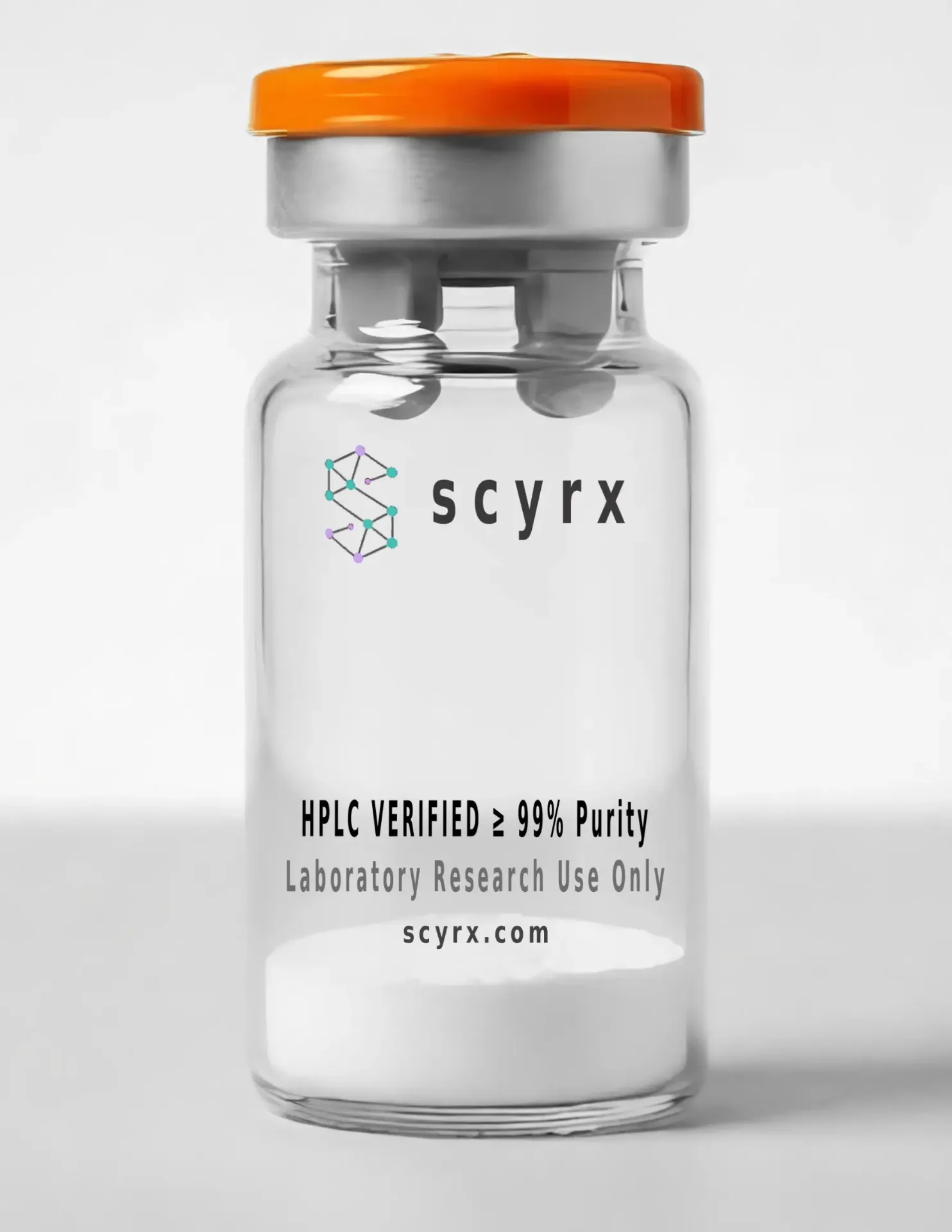
Our Ipamorelin is a 5-amino-acid synthetic pentapeptide (Aib-His-D-2-Nal-D-Phe-Lys-NH₂) engineered as a selective GHS-R1a agonist, synthesized to >99% HPLC purity for endocrine and somatotropic research. Frequently referred to in laboratory shorthand as Ipamorelin or Ipa, this compound is studied for pulsatile GH release, cortisol-sparing selectivity, and synergistic protocols with GHRH analogs in controlled laboratory investigations alongside complementary hormonal compounds for comparative endocrine research.
A selective growth-hormone-releasing peptide investigated for its clean GH-release profile in endocrine models.
Ipamorelin: Mechanism of Action and Endocrine Research Applications
Ipamorelin is a synthetic pentapeptide (Aib-His-D-2-Nal-D-Phe-Lys-NH₂) and selective growth hormone secretagogue (GHS) that functions as a ghrelin receptor agonist, specifically binding to the growth hormone secretagogue receptor type 1a (GHS-R1a) in the pituitary gland and hypothalamus. What distinguishes Ipamorelin from other GHRPs is its remarkable selectivity — research demonstrates it stimulates GH release without significantly affecting cortisol, prolactin, or aldosterone levels, making it one of the "cleanest" GH secretagogues available for research. Unlike other GHRPs that also stimulate appetite through ghrelin receptor activation, Ipamorelin has minimal effects on hunger signaling, preserving the natural pulsatile pattern of GH secretion essential for maintaining normal physiological function.
Key Research Findings (At a Glance)
| Parameter | Summary |
|---|---|
| Peptide Structure | 5 amino acids (Aib-His-D-2-Nal-D-Phe-Lys-NH₂) |
| Origin | Synthetic growth hormone secretagogue (GHS) |
| Primary Mechanism | Selective GHS-R1a agonism, pulsatile GH release |
| Key Research Areas | Endocrine function, somatotropic axis, muscle recovery, aging research |
| Distinguishing Feature | Cortisol-sparing; minimal appetite effects; preserves natural GH pulsatility |
| Key Differentiator from GHRP-2/GHRP-6 | Highly selective; no significant cortisol, prolactin, or aldosterone elevation |
| Common Dosage Range (Preclinical) | 100–300 mcg per administration (subcutaneous) |
| Typical Administration | Subcutaneous injection |
| Common Combinations | CJC-1295 No DAC, Sermorelin, Tesamorelin |
| Intended Use | Laboratory research only – not for human or veterinary consumption |
Ipamorelin Mechanism of Action: Selective GHS-R1a Agonism
Ipamorelin binds to the growth hormone secretagogue receptor (GHS-R), also known as the ghrelin receptor, which is expressed in the pituitary gland and hypothalamus. This binding mimics the action of endogenous ghrelin, triggering a signaling cascade that stimulates the synthesis and release of growth hormone from somatotroph cells in the anterior pituitary.
Unlike non-selective GHRPs, Ipa demonstrates high specificity for GH release without significant off-target effects. Research models show Ipamorelin does not substantially elevate cortisol (a stress hormone), prolactin (which can have anti-gonadal effects), or aldosterone (a mineralocorticoid). This selectivity makes Ipamorelin particularly valuable for research protocols (including Ipa-100, Ipa-200, and Ipa-300 dosing schemes) where minimizing stress-axis or reproductive-axis interference is critical.
Ipamorelin preserves the natural pulsatile pattern of GH secretion, which is essential for maintaining normal physiological function. Continuous or non-pulsatile GH elevation can lead to receptor desensitization and adverse effects, but Ipa's mechanism supports the body's natural rhythmic GH release patterns. This characteristic is frequently studied in aging research, where natural GH pulsatility declines with age.
Ipamorelin vs. GHRP-2 vs. GHRP-6: Comparative GHRP Research Analysis
Researchers frequently compare these three growth hormone releasing peptides to understand the trade-offs between GH release potency, selectivity, and side effect profiles. The table below summarizes how Ipa stacks up against GHRP-2 and GHRP-6 across the most-studied research parameters.
| Feature | Ipamorelin (Ipa) | GHRP-2 | GHRP-6 |
|---|---|---|---|
| Peptide Type | Pentapeptide (5 amino acids) | Hexapeptide (6 amino acids) | Hexapeptide (6 amino acids) |
| Receptor Target | GHS-R1a (ghrelin receptor) | GHS-R1a (ghrelin receptor) | GHS-R1a (ghrelin receptor) |
| GH Release Potency | Moderate | High | Very High |
| Selectivity | Highly selective (minimal cortisol/prolactin effects) | Moderately selective (some cortisol/prolactin elevation) | Non-selective (significant cortisol/prolactin elevation) |
| Appetite Stimulation | Minimal | Mild | Strong (potent ghrelin-mimetic) |
| Water Retention Risk | Low | Moderate | High |
| Primary Research Application | Clean GH elevation, aging research, combination protocols | Potent GH release, body composition studies | Maximum GH release, appetite research |
| Typical Research Dosing Scale | Micrograms (100-300 mcg) | Micrograms (100-300 mcg) | Micrograms (100-300 mcg) |
| Common Combinations | CJC-1295 No DAC, Sermorelin, Tesamorelin | CJC-1295 No DAC, Sermorelin | CJC-1295 No DAC (less common due to side effects) |
Note: While all three peptides stimulate GH release through ghrelin receptor activation, Ipamorelin is distinguished by its selectivity and minimal side effect profile. Researchers often combine GHRPs with GHRH analogs (such as CJC-1295 or Sermorelin) for synergistic effects. Formulation ratios and purity metrics may vary by batch.
Ipamorelin Chemical Specifications (Acetate Salt)
| Specification | Value |
|---|---|
| Synonyms | Ipamorelin, Ipa, Growth Hormone Secretagogue, Pentapeptide |
| Peptide Sequence | H-Aib-His-D-2-Nal-D-Phe-Lys-NH₂ |
| Peptide Length | 5 amino acids (Pentapeptide) |
| Key Structural Notes | 5-amino-acid synthetic pentapeptide; selective growth hormone secretagogue (GHS) and ghrelin receptor (GHS-R1a) agonist |
| Structural Modification Overview | Selective GHS-R1a Agonist: Binds specifically to the ghrelin receptor in the pituitary and hypothalamus. Pulsatile GH Release: Stimulates GH release while preserving natural pulsatile secretion patterns. Cortisol-Sparing: Does not significantly elevate cortisol, prolactin, or aldosterone levels. Minimal Appetite Effects: Unlike other GHRPs, has minimal impact on hunger signaling. Synergistic Potential: Frequently studied in combination with GHRH analogs (CJC-1295, Sermorelin) for complementary pathway activation. |
| Base Chain | 5-amino-acid linear synthetic pentapeptide |
| Molecular Formula | C₃₈H₄₉N₉O₅ · 3 C₂H₄O₂ |
| Molecular Weight | 892.0 g/mol |
| SMILES | CC(=O)O.CC(=O)O.CC(=O)O.CC(C)(C(=O)N[C@@H](CC1=CN=CN1)C(=O)N[C@H](CC2=CC3=CC=CC=C3C=C2)C(=O)N[C@H](CC4=CC=CC=C4)C(=O)N[C@@H](CCCCN)C(=O)N)N |
| SMILES Note | SMILES string may or may not include the acetate counterion. Full structural details are available via PubChem CID 9831659. |
| Purity | ≥99% by HPLC |
| Form | Lyophilized white powder |
Note: Formulation ratios and purity metrics may vary by batch. Always refer to the batch-specific Certificate of Analysis (COA) included with your order for exact composition and laboratory-verified specifications.
Ipamorelin: Acetate Salt vs. Free Base Comparison for Researchers
For researchers reviewing the literature, Ipamorelin is available as both a freebase and an acetate salt form. The acetate salt form is the standard research-grade version supplied by SCYRX, offering enhanced solubility and stability for laboratory applications. The freebase reference data is provided below for comparative literature review purposes only.
| Specification | Acetate Salt (SCYRX Supply) | Free Base (Reference Only) |
|---|---|---|
| Number of Amino Acids | 5 | 5 |
| Molecular Formula | C₃₈H₄₉N₉O₅ · 3 C₂H₄O₂ | C₃₈H₄₉N₉O₅ |
| Molecular Weight | 892.0 g/mol | 711.85 g/mol |
| CAS Number | 170851-70-4 | 170851-70-4 |
| PubChem CID | 171378556 | 9831659 |
| Form | Acetate Salt | Free Base |
Note: Molecular weights for acetate salt forms are approximate and may vary depending on the number of bound acetate molecules (x) in the salt complex. Values provided are based on the peptide core plus acetate counterions and should be used as a reference for research purposes only. Always refer to the batch-specific Certificate of Analysis (COA) for exact molecular weight verification.
Storage and Stability
Lyophilized Ipamorelin should typically be stored at -20°C in a tightly sealed container, protected from light and moisture. Under these conditions, it generally remains stable for up to 24 months from the manufacture date.
Ipamorelin can typically be shipped at room temperature for short periods (up to two weeks) without significant degradation, making it suitable for standard shipping methods.
Once reconstituted with bacteriostatic water, the solution should be refrigerated at 2-8°C and typically used within 28 days. Researchers should avoid repeated freeze-thaw cycles and vigorous shaking to maintain peptide integrity.
Research Dosing Considerations
Ipamorelin is typically reconstituted with bacteriostatic water. Because it is dosed in microgram amounts in research models (commonly Ipa-100, Ipa-200, or Ipa-300 protocols), researchers typically use reconstitution volumes of 1-3mL to allow for precise measurement with insulin syringes. In research protocols, Ipamorelin is often administered subcutaneously, frequently in combination with GHRH analogs for synergistic GH release.
Investigators studying comprehensive endocrine or somatotropic protocols often research Ipa alongside GHRH analogs such as CJC-1295 No DAC, Sermorelin Acetate, or Tesamorelin. The combination of a GHRP (like Ipa) with a GHRH analog is studied for its ability to produce greater GH release than either compound alone, as they operate through different but complementary signaling pathways.
Ipamorelin Research FAQ
Q: What makes Ipamorelin different from GHRP-2 and GHRP-6?
A: Ipamorelin is highly selective, meaning it stimulates GH release without significantly affecting cortisol, prolactin, or aldosterone levels. GHRP-2 has moderate selectivity with some cortisol/prolactin elevation, while GHRP-6 is non-selective and significantly elevates both cortisol and prolactin. Additionally, Ipamorelin has minimal effects on appetite, while GHRP-6 is a potent ghrelin-mimetic that strongly stimulates hunger.
Q: Why is Ipamorelin often combined with CJC-1295 or Sermorelin?
A: Ipamorelin (a GHRP) and CJC-1295/Sermorelin (GHRH analogs) operate through different signaling pathways. GHRPs act on the ghrelin receptor to stimulate GH release, while GHRH analogs act on GHRH receptors. When combined, they produce a synergistic effect that results in greater GH release than either compound alone, a phenomenon well-documented in endocrine research.
Q: What are the common minor side effects observed in Ipamorelin research models?
A: In research studies, Ipamorelin is generally well-tolerated due to its selectivity. The most commonly reported effects are mild injection site reactions and occasional transient headache. Unlike other GHRPs, Ipamorelin typically does not cause significant water retention, increased appetite, or elevation of stress hormones.
Q: Can Ipamorelin be mixed with other research peptides?
A: It is generally recommended to reconstitute and evaluate Ipamorelin as a standalone compound. While researchers often administer Ipamorelin alongside GHRH analogs in their protocols, mixing them in the same vial prior to administration can lead to unpredictable chemical interactions. Researchers typically reconstitute them separately and administer them at the same time via separate injections.
Q: What is the typical Ipamorelin research dosing scale?
A: Ipamorelin is dosed in micrograms (mcg), with research protocols most commonly referencing 100, 200, or 300 mcg per administration (often termed Ipa-100, Ipa-200, Ipa-300). Lyophilized vials are typically reconstituted with 1–3 mL of bacteriostatic water to allow precise measurement with insulin syringes. All dosing references are derived from published preclinical literature and are provided for in vitro and animal-model protocol design only.
Q: How is Ipamorelin studied in muscle growth and recovery research?
A: Researchers investigate Ipamorelin's selective GH release profile in models examining lean tissue accretion, connective-tissue repair, and post-exercise recovery. Because Ipamorelin preserves the natural pulsatile pattern of GH secretion without elevating cortisol or prolactin, it is frequently used as a comparator in protocols evaluating IGF-1 downstream signaling and muscle-protein synthesis endpoints.
Related Products
Researchers studying Ipamorelin frequently reference the following hormonal and performance compounds in companion protocols:
Scientific References and Citations
- Raun K, et al. Ipamorelin, a novel growth hormone secretagogue. Eur J Endocrinol. 1998;138(5):552-559. doi:10.1530/eje.0.1380552
- Hansen TK, et al. Effects of growth hormone secretagogues on growth hormone release in vitro. Eur J Endocrinol. 2000;142(5):500-506. doi:10.1530/eje.0.1420500
- Malagón MM, et al. Different intracellular pathways are involved in growth hormone-releasing peptide-6 and growth hormone-releasing hormone action on rat anterior pituitary cells. Endocrinology. 1996;137(3):1097-1103. doi:10.1210/endo.137.3.8603615
- Arvat E, et al. Growth hormone-releasing peptides and their analogs: clinical perspectives. J Endocrinol Invest. 2000;23(6 Suppl):45-52.
- Ghigo E, et al. The endocrine effects of ipamorelin, a new synthetic GH-releasing peptide, in adults. J Clin Endocrinol Metab. 1999;84(10):3559-3565. doi:10.1210/jcem.84.10.6045
- Brogden RN, Fitton A. Ipamorelin. Drugs R D. 1999;1(4):315-320. doi:10.2165/00126839-199901040-00007