
Research Context
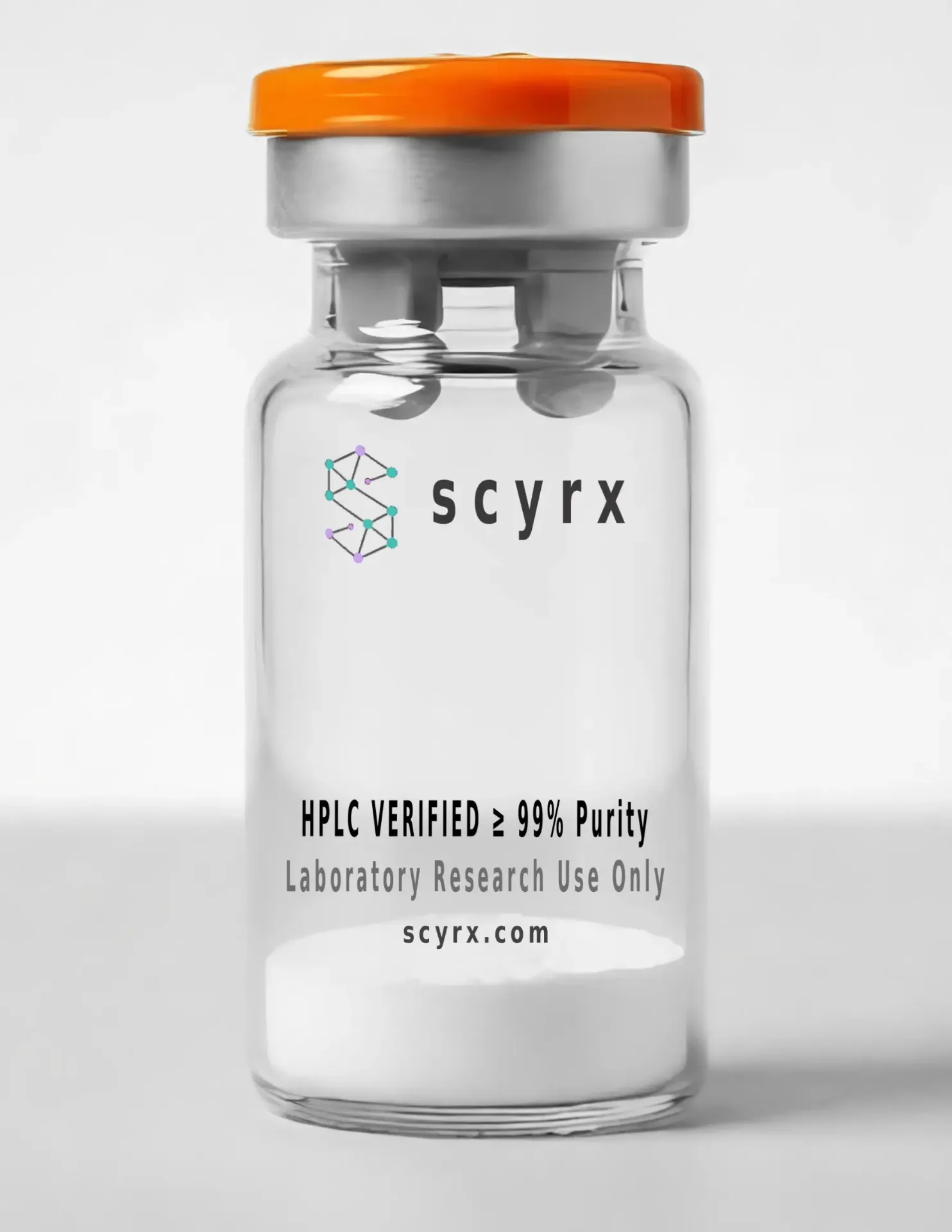
Our IGF-1 LR3 vial is a long-acting analog of Insulin-Like Growth Factor 1 synthesized to >99% HPLC purity for cellular growth and anabolic-signaling research.
Within the broader landscape of research compounds — colloquially referred to in community forums as compounds or "research peptides" — IGF-1 LR3 is studied for its mechanistic profile in controlled laboratory protocols. Investigators frequently catalog it alongside complementary research compounds when designing comparative or pathway-level studies.
A long-acting analog of Insulin-Like Growth Factor 1 with extended half-life.
IGF-1 LR3: Mechanism of Action and Anabolic Research Applications
Our IGF-1 LR3 is an 83-amino-acid recombinant analog of human Insulin-like Growth Factor 1, engineered with an arginine substitution at position 3 and a 13-amino-acid N-terminal extension for extended half-life and IGFBP resistance, synthesized to >99% HPLC purity for cellular growth and anabolic-signaling research. Frequently referred to in laboratory shorthand as IGF-1 LR3, Long R3 IGF-1, or LR3, this compound is studied for IGF-1 receptor activation, protein synthesis, and cellular proliferation in controlled laboratory investigations alongside complementary growth factors for comparative anabolic research.
Key Research Findings (At a Glance)
| Parameter | Summary |
|---|---|
| Peptide Structure | 83 amino acids (recombinant IGF-1 analog) |
| Origin | Recombinant analog of human IGF-1 |
| Primary Mechanism | IGF-1R activation, PI3K/AKT and MAPK signaling |
| Key Research Areas | Muscle biology, protein synthesis, hyperplasia, tissue regeneration, metabolic research |
| Distinguishing Feature | Extended half-life (~20-30 hours) via IGFBP resistance |
| Key Differentiator from Native IGF-1 | IGFBP resistance; 20-30 hour half-life vs. 10-20 minutes |
| Typical Research Dosing Scale | Micrograms (50-100 mcg per protocol) |
| Common Combinations | Ipamorelin, CJC-1295 No DAC |
| Intended Use | Laboratory research only – not for human or veterinary consumption |
Overview
IGF-1 LR3 (frequently referred to as LR3, Long R3 IGF-1, or IGF-1 Long) is a modified, long-acting analog of endogenous Insulin-Like Growth Factor 1 (IGF-1). It is an 83-amino-acid peptide (compared to 70 amino acids in native IGF-1), engineered with two critical modifications: an arginine substitution at position 3 (replacing glutamic acid) and a 13-amino-acid N-terminal extension derived from the E-domain of Mechano Growth Factor (MGF). These structural modifications dramatically reduce its affinity for IGF-binding proteins (IGFBPs), allowing it to remain biologically active in circulation for approximately 20-30 hours — compared to just 10-20 minutes for native IGF-1. Because of its extended half-life and resistance to binding protein inhibition, IGF-1 LR3 is heavily utilized in research models investigating cellular proliferation, differentiation, protein synthesis, and anabolic signaling pathways.
IGF-1 LR3 Mechanism of Action: IGF-1 Receptor Activation and IGFBP Resistance
IGF-1 LR3 binds to and activates the IGF-1 receptor (IGF-1R), a transmembrane tyrosine kinase receptor expressed on most cell types. This binding triggers the PI3K/AKT (phosphoinositide 3-kinase/protein kinase B) and MAPK (mitogen-activated protein kinase) intracellular signaling pathways, which promote cellular proliferation, differentiation, protein synthesis, and inhibition of apoptosis.
The two structural modifications in LR3 (Arg3 substitution and N-terminal extension) dramatically reduce its affinity for IGF-binding proteins (IGFBP-1 through IGFBP-6). Because it does not bind to these circulating binding proteins, Long R3 IGF-1 remains bioavailable and biologically active for approximately 20-30 hours, compared to just 10-20 minutes for native IGF. This extended half-life allows for sustained IGF-1R activation and prolonged downstream signaling.
The sustained activation of IGF-1R by IGF-1 LR3 results in powerful anabolic and mitogenic effects. Research demonstrates it stimulates amino acid uptake into cells, activates mTOR (mechanistic target of rapamycin) signaling for protein synthesis, promotes satellite cell proliferation and differentiation in muscle tissue, and inhibits protein degradation pathways. These effects make IGF-1 Long a primary compound of interest in muscle biology, tissue repair, and cellular growth research.
IGF-1 LR3 vs. Native IGF-1 vs. IGF-1 DES: Comparative IGF Analog Research Analysis
Researchers frequently compare these three IGF-1 variants to understand the trade-offs between half-life, binding protein resistance, and specific research applications.
| Feature | IGF-1 LR3 (Long R3) | Native IGF-1 | IGF-1 DES (Des(1-3)IGF-1) |
|---|---|---|---|
| Peptide Length | 83 amino acids | 70 amino acids | 67 amino acids (lacks first 3 N-terminal residues) |
| Structural Modifications | Arg3 substitution + 13-aa N-terminal extension | None (native human sequence) | Deletion of first 3 N-terminal amino acids |
| IGFBP Binding Affinity | Very low (resistant to binding proteins) | High (binds IGFBP-1 through IGFBP-6) | Very low (resistant to binding proteins) |
| Biological Half-Life | ~20-30 hours | ~10-20 minutes | ~20-30 hours |
| Primary Mechanism | IGF-1R activation (PI3K/AKT, MAPK pathways) | IGF-1R activation (PI3K/AKT, MAPK pathways) | IGF-1R activation (PI3K/AKT, MAPK pathways) |
| Key Research Advantage | Extended half-life; sustained anabolic signaling | Native sequence; historical baseline | Short-acting; ideal for localized, acute studies |
| Primary Research Application | Muscle biology, tissue regeneration, long-term anabolic studies | Historical IGF research, metabolic studies | Localized tissue studies, acute signaling research |
| Typical Research Dosing Scale | Micrograms (50mcg - 100mcg per protocol) | Micrograms (varies widely) | Micrograms (varies widely) |
Note: While all three compounds activate the IGF-1 receptor, IGF-1 LR3 is distinguished by its extended half-life and resistance to binding protein inhibition, making it ideal for sustained anabolic signaling research. IGF-1 DES, with its similarly low IGFBP affinity but shorter functional duration in certain contexts, is often preferred for localized or acute research models. Formulation ratios and purity metrics may vary by batch.
IGF-1 LR3 Chemical Specifications (Acetate Salt)
| Specification | Value |
|---|---|
| Synonyms | IGF-1 LR3, Long R3 IGF-1, IGF-1 Long, LR3 |
| Peptide Sequence | 83-amino-acid recombinant analog (native IGF-1 chain + 13-aa N-terminal extension + Arg3 substitution) |
| Peptide Length | 83 amino acids |
| Key Structural Notes | 83-amino-acid recombinant analog of human Insulin-like Growth Factor 1; engineered with N-terminal extension and Arg3 substitution for extended half-life |
| Structural Modification Overview | Extended Half-Life Analog: Modified recombinant IGF-1 with two critical modifications: arginine substitution at position 3 (replacing glutamic acid) and a 13-amino-acid N-terminal extension. IGFBP Resistance: Modifications dramatically reduce affinity for IGF-binding proteins (IGFBPs), preventing rapid clearance from circulation. Sustained Bioavailability: Half-life of approximately 20-30 hours compared to 10-20 minutes for native IGF-1. Anabolic Signaling: Potent activator of IGF-1R, stimulating PI3K/AKT and MAPK pathways for protein synthesis, cellular proliferation, and hyperplasia. |
| Base Chain | 83-amino-acid recombinant polypeptide |
| Molecular Formula | C₄₀₀H₆₂₅N₁₁₁O₁₁₅S₉ · xC₂H₄O₂ |
| Molecular Weight | ~9,178.1 g/mol |
| SMILES | A string representation is not officially available in public databases due to the massive size and structural complexity of the 83-amino-acid recombinant chain |
| SMILES Note | SMILES string may or may not include the acetate counterion. Full structural details are available via PubChem CID 381123731. |
| Purity | ≥99% by HPLC |
| Form | Lyophilized white powder |
Note: Formulation ratios and purity metrics may vary by batch. Always refer to the batch-specific Certificate of Analysis (COA) included with your order for exact composition and laboratory-verified specifications.
IGF-1 LR3: Acetate Salt vs. Free Base Comparison for Researchers
For researchers reviewing the literature, IGF-1 LR3 is available as both a freebase and an acetate salt form. The acetate salt form is the standard research-grade version supplied by SCYRX, offering enhanced solubility and stability for laboratory applications. The freebase reference data is provided below for comparative literature review purposes only.
| Specification | Acetate Salt (SCYRX Supply) | Free Base (Reference Only) |
|---|---|---|
| Number of Amino Acids | 83 | 83 |
| Molecular Formula | C₄₀₀H₆₂₅N₁₁₁O₁₁₅S₉ · xC₂H₄O₂ | C₄₀₀H₆₂₅N₁₁₁O₁₁₅S₉ |
| Molecular Weight | ~9,178.1 g/mol | ~9,117.6 g/mol |
| CAS Number | 946870-92-4 | 143045-27-6 |
| PubChem CID | 381123731 | 381123731 |
| Form | Acetate Salt | Free Base |
Note: Molecular weights for acetate salt forms are approximate and may vary depending on the number of bound acetate molecules (x) in the salt complex. Values provided are based on the peptide core plus acetate counterions and should be used as a reference for research purposes only. Always refer to the batch-specific Certificate of Analysis (COA) for exact molecular weight verification.
Storage and Stability
Lyophilized IGF-1 LR3 should typically be stored at -20°C in a tightly sealed container, protected from light and moisture. Under these conditions, it generally remains stable for up to 24 months from the manufacture date.
IGF-1 LR3 can typically be shipped at room temperature for short periods (up to two weeks) without significant degradation, making it suitable for standard shipping methods.
Once reconstituted with bacteriostatic water, the solution should be refrigerated at 2-8°C and typically used within 28 days. Researchers should avoid repeated freeze-thaw cycles and vigorous shaking to maintain peptide integrity.
Research Protocol Considerations
Research Dosing Considerations
In preclinical research models, IGF-1 LR3 is evaluated in microgram (mcg) quantities. Administration is most frequently via subcutaneous or intramuscular injection. Due to its long half-life compared to native IGF-1, it is often studied in protocols requiring less frequent dosing to maintain elevated systemic levels.
Researchers typically use reconstitution volumes of 1–3 mL for precise measurement with insulin syringes. Common protocol references include 50mcg and 100mcg administrations.
Investigators studying comprehensive anabolic or tissue regeneration protocols often research IGF-1 LR3 alongside growth hormone secretagogues (such as Ipamorelin or CJC-1295 No DAC) to elevate endogenous GH and IGF-1 levels. Combining exogenous Long R3 IGF-1 with GH secretagogues is studied for synergistic effects on the somatotropic axis and downstream anabolic signaling.
IGF-1 LR3 Research FAQ
Q: Is IGF-1 LR3 legal to purchase?
A: IGF-1 LR3 is sold strictly as a research-grade chemical for in vitro laboratory and preclinical research use only. It is not approved for human or veterinary consumption, diagnosis, or therapy. Purchasers are responsible for compliance with all applicable local, state, and federal regulations governing the acquisition and use of research chemicals.
Q: What is the primary mechanism of IGF-1 LR3 in muscle research?
A: IGF-1 LR3 is a modified analog of Insulin-like Growth Factor 1. It binds to IGF-1 receptors on muscle cells, stimulating protein synthesis and cell proliferation. The "LR3" modification (an N-terminal extension and an Arginine substitution at position 3) prevents it from binding to IGF-binding proteins, significantly extending its half-life and potency compared to native IGF-1.
Q: How does IGF-1 LR3 differ from native IGF-1?
A: Native IGF-1 has a very short half-life (minutes) because it binds tightly to circulating IGF-binding proteins (IGFBPs). IGF-1 LR3 has a much longer half-life (20-30 hours) because its modified structure has a lower affinity for these binding proteins, allowing it to remain active in the bloodstream for a much longer period.
Q: Why is IGF-1 LR3 frequently studied in hyperplasia research?
A: Unlike many other growth factors that primarily cause hypertrophy (enlargement of existing cells), IGF-1 LR3 is extensively researched for its ability to stimulate hyperplasia (the creation of new muscle fibers) through the activation of satellite cells. This makes it a unique compound for studying muscle regeneration and growth potential.
Q: Does IGF-1 LR3 cause significant side effects in research models?
A: Research indicates that IGF-1 LR3 can cause hypoglycemia (low blood sugar) due to its insulin-like activity. It may also contribute to organ growth (visceromegaly) if used in high doses over long periods. These metabolic and structural effects are critical variables monitored in endocrine and oncology research.
Q: Can IGF-1 LR3 be stacked with Growth Hormone Secretagogues?
A: Yes. Researchers often combine IGF-1 LR3 with GH secretagogues (like Ipamorelin or CJC-1295) to study synergistic effects. While secretagogues stimulate the body's natural production of GH and IGF-1, adding exogenous IGF-1 LR3 provides a direct, potent signal for tissue growth, allowing for comprehensive studies of the somatotropic axis.
Scientific References and Citations
- D'Ercole AJ, Stiles AD, Underwood LE. Tissue concentrations of somatomedin C: further evidence for multiple actions of pituitary growth hormone. Proc Natl Acad Sci U S A. 1984;81(3):935-939. doi:10.1073/pnas.81.3.935
- LeRoith D, Bondy C, Yakar S, Liu JL, Butler A. The somatomedin hypothesis: 2001. Endocr Rev. 2001;22(1):53-74. doi:10.1210/edrv.22.1.0421
- Mathews LS, Enberg GW, Norstedt G. Regulation of rat growth hormone receptor gene expression. J Biol Chem. 1989;264(14):8142-8148.
- Adams TE, Epa VC, Garrett TP, Ward CW. Structure and function of the type 1 insulin-like growth factor receptor. Cell Mol Life Sci. 2000;57(10):1425-1436. doi:10.1007/pl00000765
- Bach LA. IGF-binding proteins and cancer. J Endocrinol. 2021;249(2):R57-R72. doi:10.1530/JOE-20-0560
- Duan C, Xu Q. Roles of insulin-like growth factor (IGF) system in the regulation of fish growth and development. Gen Comp Endocrinol. 2021;306:113742. doi:10.1016/j.ygcen.2021.113742
- Froesch ER, Schmid C, Schwander J, Zapf J. Actions of insulin-like growth factors. Annu Rev Physiol. 1985;47:443-467. doi:10.1146/annurev.ph.47.030185.002303
- Jones JI, Clemmons DR. Insulin-like growth factors and their binding proteins: biological actions. Endocr Rev. 1995;16(1):3-34. doi:10.1210/edrv-16-1-3
Related Research Compounds
Researchers studying IGF-1 LR3 frequently investigate related growth factor and secretagogue compounds in parallel protocols:
- Ipamorelin — selective GH secretagogue commonly studied alongside IGF-1 LR3 for somatotropic axis research.
- MGF (Mechano Growth Factor) — splice variant of IGF-1 evaluated for satellite cell activation and localized muscle research.